
Gifts for remembrance that leave something lasting
There are gifts that we open, thank, put away, and after a while we can no longer remember who gave them. Not because they were of little value. Not because the person who gave them was not important. It's just that no grain of feeling was stuck in that thing. It remained a sign of the occasion, a polite gesture, a beautifully wrapped "we had to give something.".
And there are others
The kind that have been in a drawer for twenty years, even though they have long since been worn. The kind that we don't throw away even when they no longer match our style, our home interior, or our practical needs. They don't stay because of their function. They stay because there's something in them. Or rather, something is stuck.
What should you ask yourself when choosing a gift?
Surprisingly, the difference between these two gifts is rarely price. An expensive item can be forgotten just as quickly as a cheap one. A luxurious object can have no intrinsic weight, while a small, almost insignificant item can become a relic of personal history. So the real question when choosing a gift is not: how much does it cost? The question is: what needs to happen for the gift to remain in the memory, not in the drawer?
A hundred years ago, the French anthropologist Marcel Mauss described what people seem to have always felt but have not always been able to name: a gift is never just a thing. It is not the transfer of an object from one hand to another. When a gift is given, what is also passed on is a part of a relationship, of attention, of commitment, even of the person themselves. A gift intervenes between two people and creates a connection that a hastily purchased object does not have.
A gift is never neutral
Therefore, a gift is never neutral. It carries the question: have you thought about me? Have you stopped to think about who I am? Does this thing contain your time, your attention, the feeling that I mean something to you?
Maybe that's why a gift bought at the last minute just to "have something" fades so easily into memory. It lacks enough intention. It fulfilled a social duty, but it didn't create an inner connection. When we open the package, we find the item inside, but we don't find the story behind why it was given.
What Mauss saw in community rituals is now explained in its own language by consumer psychology. In exploring why we keep certain objects almost as relics, scientists talk about values that are not explained by either the material or the market price. One of them is the value of memory. An object becomes precious because it reminds us of a person, an event, a time we spent together.
The more subtle value of a gift – what is it?
But there is an even more subtle value. We could call it the value of substance. It is our intuition that a person's presence somehow remains in an object that they have touched, used, held in their hands, worn on their bodies. Grandma's ring is not precious because it is made of gold. It is precious because we feel her in it. An old letter is valuable not only because of the words written on it. It is valuable because the paper was touched by a hand that we may never be able to touch again.
This is not just a sentimental illusion. Research shows that people value objects that have actually been used or touched by an important person more than the same objects that are only formally owned. Physical touch seems to leave an invisible mark. We cannot show it, weigh it, or record it, but we can feel it. The thing becomes more than just an object. It becomes a carrier of presence.
This is where the most interesting part of a gift begins. Because such value does not belong to the past alone. It is not the privilege of old family objects. A relic does not have to be born after fifty years. Sometimes it begins the moment we deliberately choose an object, thinking of the feeling we want to pass on through it.
Meaning is born before delivery
In other words, a gift begins to create its mission even before it is given. When we give not only for this day, but also for what may remain after us, the very gesture of giving changes. We no longer look for the most convenient thing. We no longer choose only what „should be liked.“ We begin to ask: what from this moment could live on? What could become a tiny container of memory? What could this person keep not because they need to, but because they cannot let go?
Right here original, handmade work gains another weight.
Several entities intertwine in a memorial gift
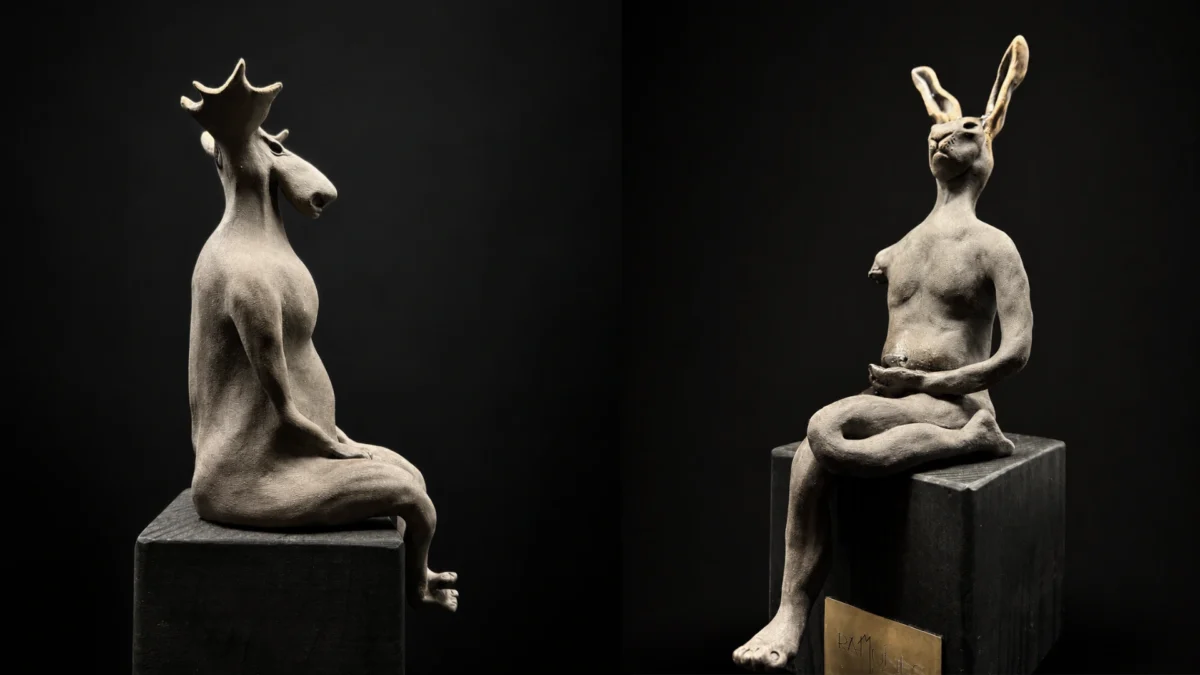
A handmade object is not anonymous. It is already marked by the human time given to it, tamed by hands, felt through in the material. It is born not from an exact drawing, though that is needed too, but from a thought that has been recognised. A mass-produced object can be beautiful, well made, functional. Yet it often lacks the human density of a work that waited for its shape in the maker's hands.
And when a work is created based on a specific story, symbol, person, or occasion, several entities come together in it. The creator, who derived form from material. The giver, who chose this particular work. And the recipient, who recognizes themselves or their connection to another person in it.
Such a work is no longer a thing among things. It becomes a meeting place.
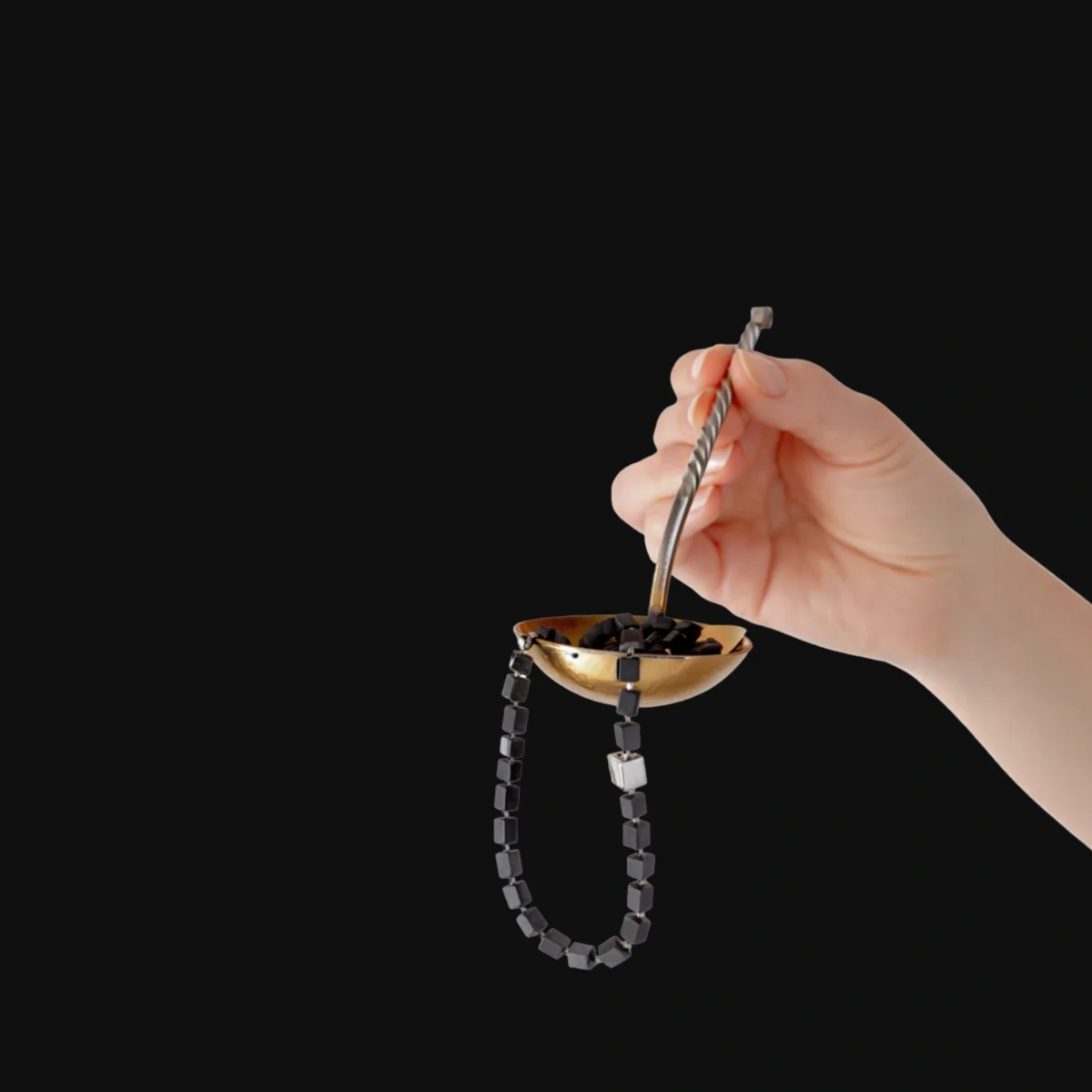
A porcelain miniature in a silver setting, born from a story, is not merely a piece of jewellery. It is a story that can be worn on the body. It is a sign that says nothing aloud, yet lets a person recognise: this is meant for me. Not for anyone. Not for the occasion in general. For me.
What gift is right for remembrance?
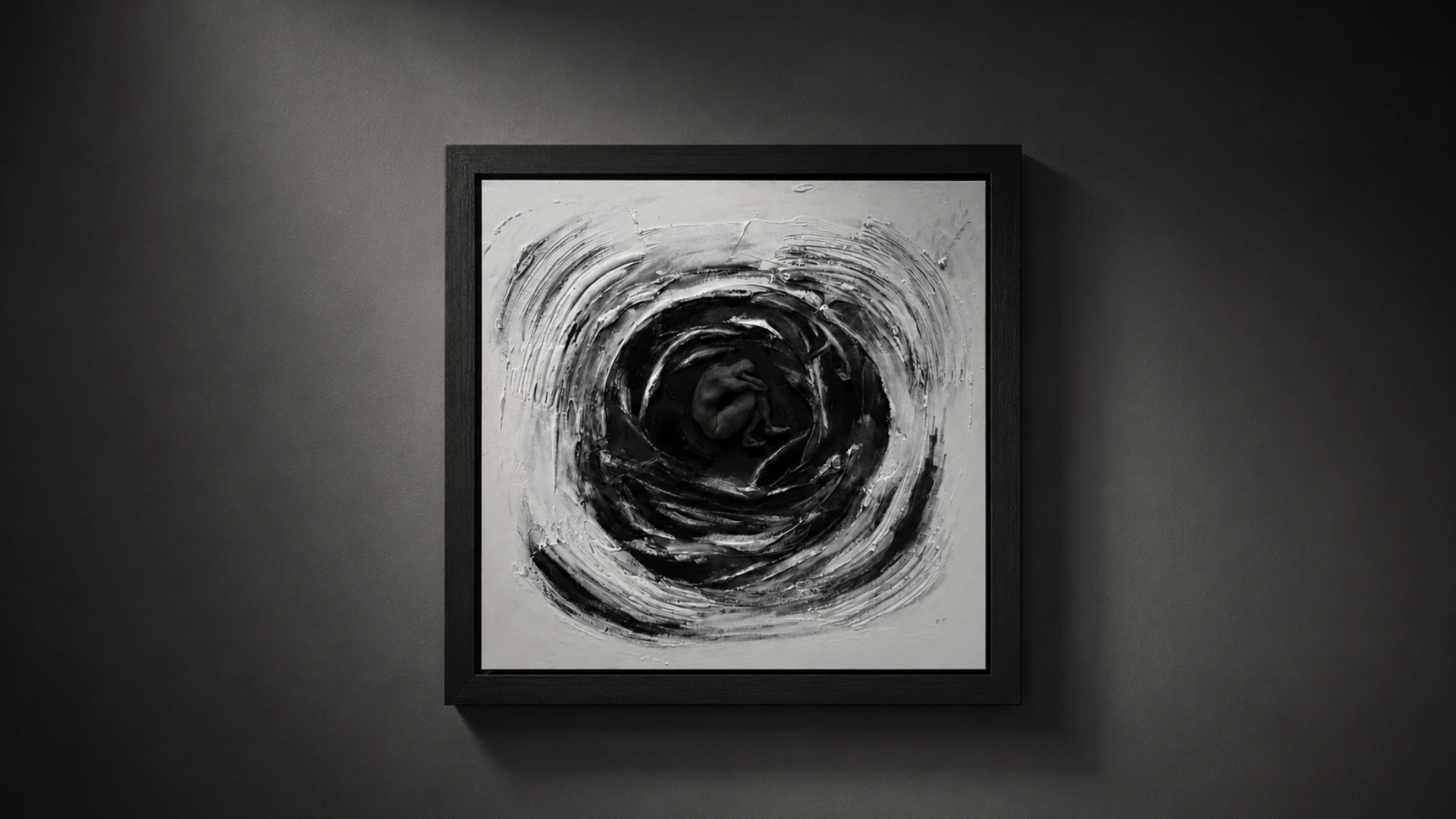
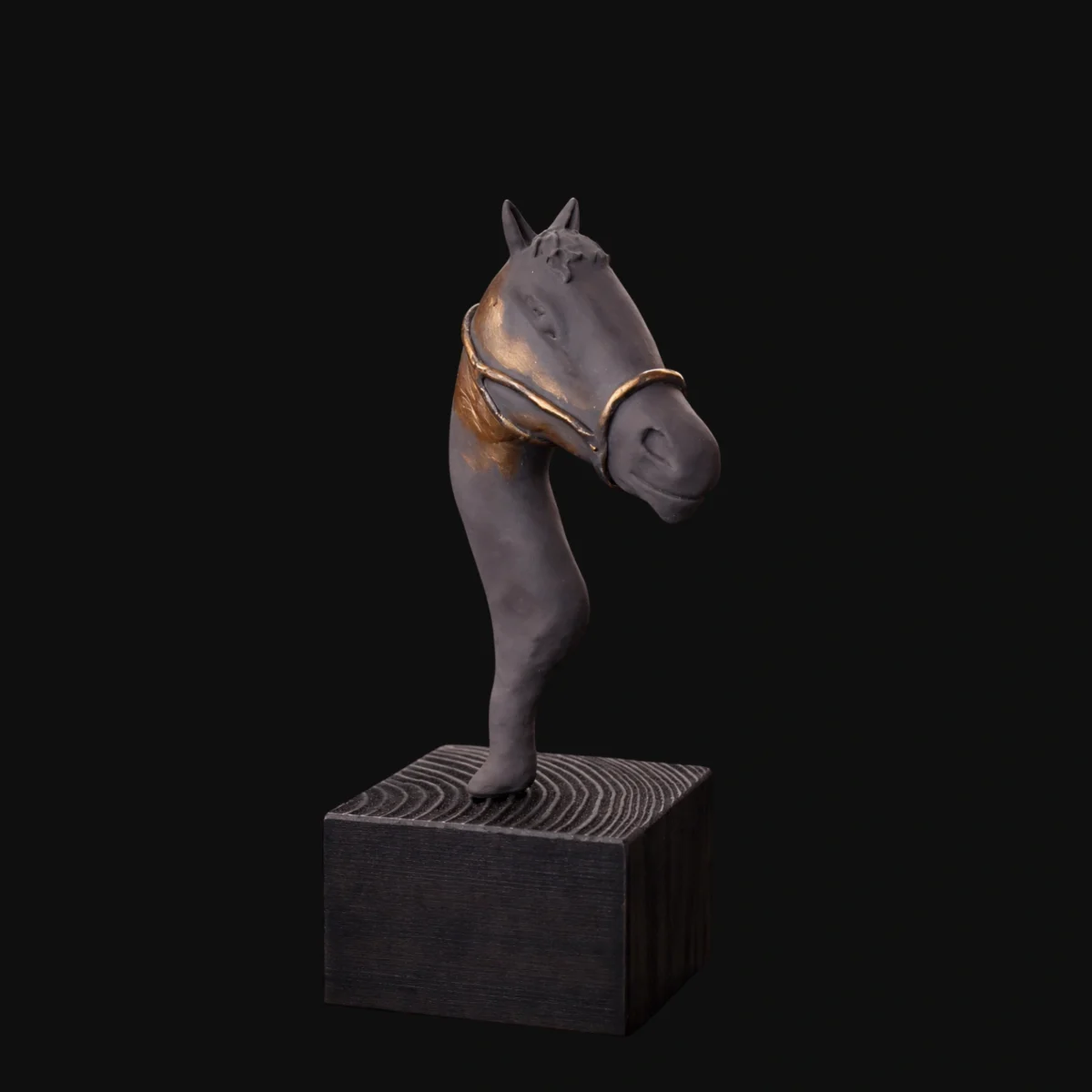
When a gift is meant not only for a particular occasion but also for what we want to keep, its form can vary a great deal. It may be a porcelain miniature in a silver setting, bringing out a date or a symbol that matters to someone and the event bound up with it. It may be a sculpture, or even a family hearth that becomes a sign of that person's or the family's continuity. Or perhaps a framed miniature whose meaning is known only to the giver and the receiver.
A gift for remembrance begins not with the question of which object or work one could buy, but with what a work can carry of the person, their story or one's bond with them – and, more importantly, what it can give meaning to.
So the question of a meaningful gift is never simply „what would he or she like?“ Any store, algorithm, or best-seller list can answer that question. The real question is deeper: what connects me to this person even when the celebration is over, the flowers wither, the words fade, and what happened is in the past?
What will be left in ten years? In twenty? Maybe even in fifty?
The answer is almost never the most popular object. It is usually a work that is personal, one in which the touch of hands can be felt, a reflection of a symbol or a story. A work the recipient recognises as made for them. A gift that not only marks the occasion, but keeps the connection.
In my studio, works are born exactly like this – not as objects, but as signs in which a feeling takes shape. If you are looking for a gift that should transcend the occasion and last, let's not start with the object. Let's start with the story that it must be able to preserve within itself.
A gift for remembrance is not about the object, because it is always about the connection.
With inspiration,
Ramunė
Mauss, M. (1990). The gift: The form and reason for exchange in archaic societies (WD Halls, Trans.). Routledge. (Originally published 1925)
Newman, GE, & Bloom, P. (2014). Physical contact influences how much people pay at celebrity auctions. Proceedings of the National Academy of Sciences, 111(10), 3705–3708. https://doi.org/10.1073/pnas.1313637111
Newman, GE, Diesendruck, G., & Bloom, P. (2011). Celebrity contagion and the value of objects. Journal of Consumer Research, 38(2), 215–228. https://doi.org/10.1086/658999
Tezer, A., Philp, M., Pancer, E., & Zhu, Q. (2024). Presents with presence: The role of memory and essence in heirloom gift appreciation. Psychology & Marketing, 41(10), 2463–2477. https://doi.org/10.1002/mar.22063