
Sculpture as a dialogue between matter and man
Sculpture is not simply a three-dimensional art form. It is a living synthesis of matter and idea, deeply rooted in the cultural and philosophical development of humanity. It is material that is transformed into evocative objects speaking of time, of being, and of a person's place in the world. Unlike two-dimensional works, sculpture shares physical space with the viewer, allowing it to be not only seen but also physically experienced. As one moves around it, the appearance of the work changes, revealing a dynamic impression and gathering an emotional charge.
It is not only an experience of sight, but also of presence, which creates a living dialogue between man and creation. As a result, an encounter with a sculpture often becomes embedded not so much in memory as in the experienced sensation that accompanies it long after the encounter.
Such a meeting does not happen only in a square or a museum. An interior piece that lives with us at home, one we walk past every day, also builds a relationship with the space – only much closer, more quietly and more personally.
Sculpture is the interplay of form and idea that, through symbols and across eras, creates a dialogue with the viewer. From archaic figures to contemporary installations it has kept changing, yet it has always stayed bound to the human being, to space, and to what we wish to give meaning.
Sculpture through time: from symbol to experience
The history of sculpture is a mirror of the development of human civilization. The earliest images in stone and bone, steeped in magic, bore witness to a primal bond betweenthe human being and the divine. Ancient civilizations gave rise to monumental statues of gods and rulers, granting them the power of immortality. In ancient Greece sculptors sought perfection: the proportions of the human body and a balance of the spirit. In the Middle Ages sculpture became a servant of faith, conveying religious truths and strengthening the spiritual world of the community.
In the Renaissance sculpture brought back classical ideals, combining them with a new humanist outlook. The clearest example is Michelangelo's "David" (1501–1504), which rose in Florence as a symbol of beauty and of political courage alike. The sculpture was placed by the town hall, embodying the spirit of republican freedom and resistance. Such works show that sculpture always has a social face as well: it speaks of the identity of a community and of the ideals of its time.
In the Baroque era sculpture came to be ruled by drama, dynamic movement and theatricality. The clearest example is Gian Lorenzo Bernini's "Ecstasy of Saint Teresa" (1647–1652, Rome), which bears witness to the mystical emotional tension of Baroque sculpture. Later neoclassicism restored restraint and the clarity of classical form, while romanticism brought powerful emotion and the expression of inner experience.
The modernism of the twentieth century brought radical change to sculpture: artists turned away from outward likeness towards form itself, the texture of the material and the expression of ideas. Constantin Brâncuși's abstract sculptures sought to convey essence, while Henry Moore's organic forms explored the relationship between the human body and nature. Kinetic objects and experimental installations followed, widening the boundaries of sculpture.
This tradition continues – sculpture moves into digital and virtual space, where the idea often outweighs the physical object, and the viewer is invited to become part of the work.
From protest to poetry: sculpture as social dialogue
Contemporary sculpture transcends traditional boundaries, becoming an integral part of public space and of social life. It acts as a visual communicator, shaping community identity, preserving historical memory and provoking debate.
Public sculptures not only adorn cities but also give them a distinctive face, becoming landmarks and symbols. They democratize the experience of art, drawing all residents into an aesthetic dialogue and creating a shared sense of identity.
Memorials and monuments materialize historical events, allowing society to physically experience the act of remembrance. More abstract forms and metaphors convey complex feelings – loss, suffering, hope – and affect the long-term collective consciousness, shaping a shared historical narrative.
Contemporary sculptors respond to current issues by using sculpture as a platform for dialogue. Such works provoke discussions about consumerism, gender equality, and civic stance, becoming a form of social commentary or even protest.
Works become powerful not only through their form but through their ability to materialize collective emotion. "Fearless Girl" in New York, for instance, does not only stand for a girl's courage before the might of the financial world; it became a catalyst for real social change, prompting debate about gender equality on company boards. The concrete stelae of the Holocaust memorial in Berlin, meanwhile, work in more than a visual way: wandering among them, the visitor feels disorientation, unease and a fragile relationship with historical memory in the body.
Such works show that sculpture speaks not only to the eye but to the whole of our sensory and emotional field.
Why did I choose to make sculpture?
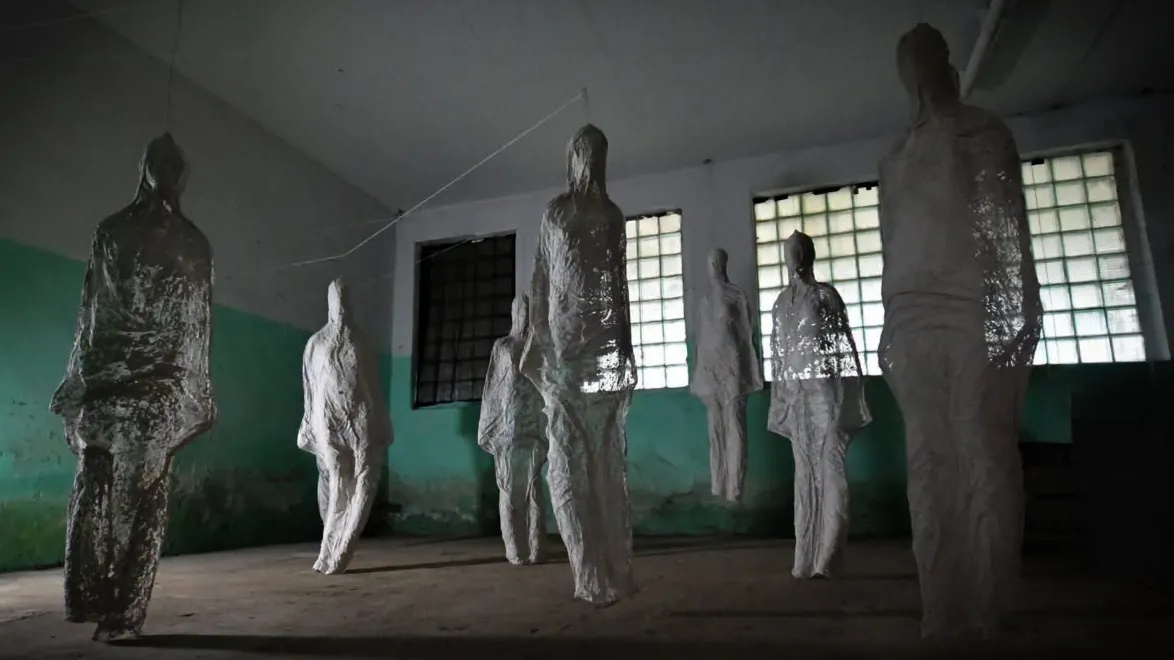
Perhaps because the time had come to go beyond what I already know how to do. Sculpture seems grand to me not merely for its size or its physical presence in a space. It asks for more: more room, more courage, more responsibility for what I place in front of a person. That is exactly what makes it interesting to me.
In making sculpture I step out of my usual scale, out of the object that can be picked up in the hand, and I make something a person has to meet in space. I had already lived through a similar crossing of a boundary while making the installation "Kiautai" ("Shells") at the Aritmija arts festival in Merkinė in 2026. That experience let me understand that what interests me is not only making an object, but also making the place where it stands, its relationship with a person, the silence between several forms.
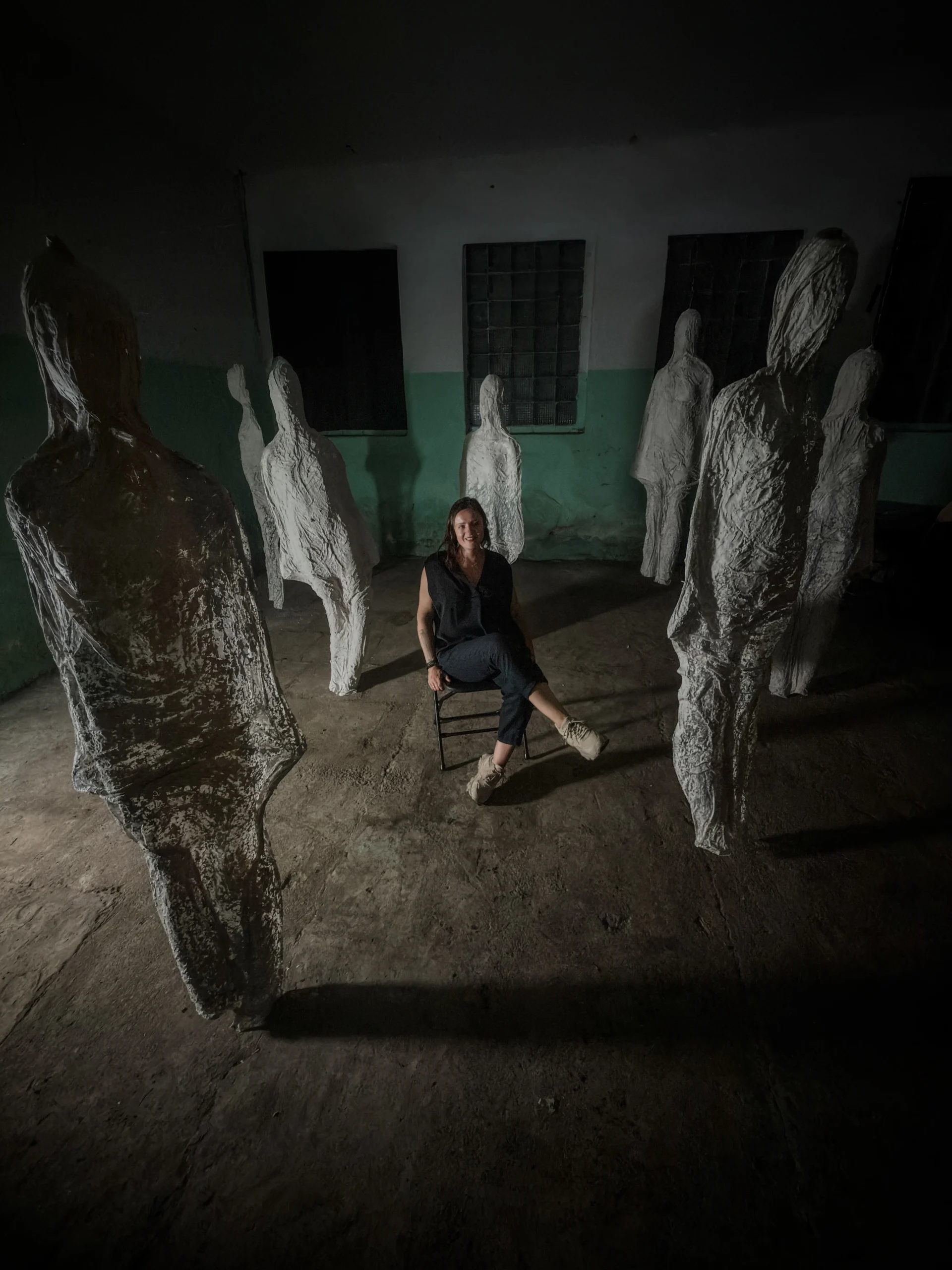
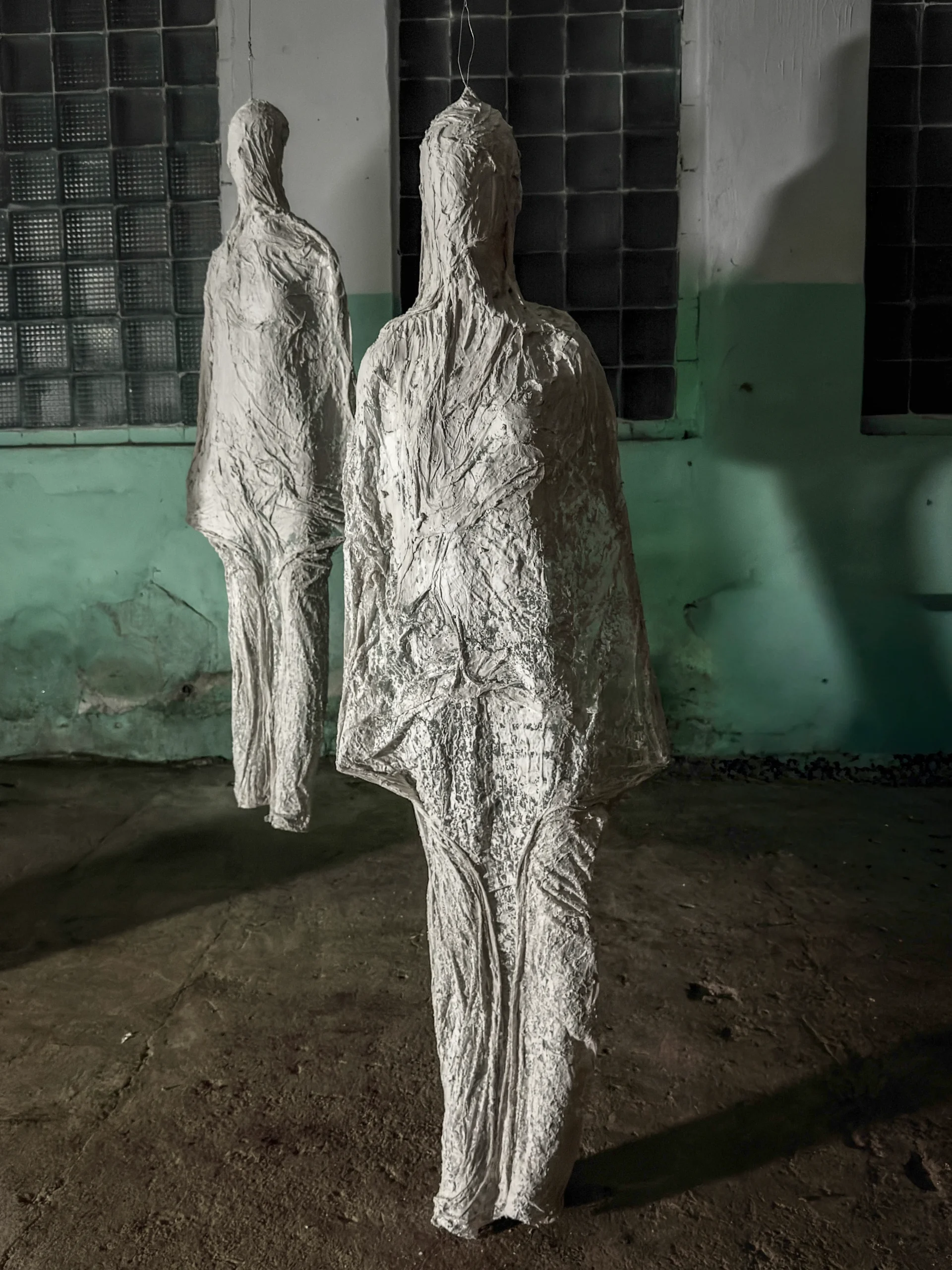
So sculpture, for me, is not an attempt to become "a sculptor". It is the natural step towards where my work wants to go right now.
Sculpture in a person's space
At home this language is heard a little more quietly, as sculpture becomes an inseparable interior piece, an object that holds the eye, met day after day, and its meaning grows over time.
Here sculpture is not merely decoration. It lives together with the person and the space, changing with the light, the glance and everyday life. Its meaning does not necessarily stay the one the author gave it.
A work in a home asks first of all for a place. Not a scrap of a shelf, but a surface where nothing stands and on which nothing is put down.
Second, it asks for an answer. A visitor notices it and asks where it came from. You then have to explain why it is here, and the object becomes part of the conversation, perhaps even its centre.
And only later does the most important part become clear. Living in a space where you meet it every day, the work keeps revealing itself differently. A piece of furniture gradually merges into its surroundings and becomes almost unnoticed; a work of art does the opposite – the longer it is beside you, the more meanings you can find in it.
Perhaps this is why sculpture is not only an idea made object. It can become a living dialogue.
From the past to the future: a sense of the meaning of sculpture
Sculpture is a singular language of art that tells the story of humankind through space and matter, keeps memory and shapes the aesthetics of our everyday life.
Ancient statues embodied gods and heroes; today they help give meaning to struggles for freedom, to social ideals and to cultural identity. Sculptures in public spaces act as carriers of collective memory and as a mirror of the community – they foster pride and prompt dialogue about who we are and what values we pursue.
Despite the advance of technology, three-dimensional works of art still hold an important place in our world: we raise sculptures to mark significant events, we argue about their form, we give them as gifts to embody a bond, and we visit them hoping to experience something real.
Therefore, sculpture is not only a witness to the past. It is also a mirror of the future – each new work invites us to rethink what kind of world we want to live in, what symbols to pass on to future generations. This eternal dialogue between form and man allows sculpture to remain one of the most powerful artistic languages, connecting history, the present and visions of the future.
Skulptūros exist in space and leave it to each person to decide what they see in them. And for me they are like a constant walk a little further than I thought yesterday I could go.
With inspiration,
Ramunė
Arnason, H. H., & Mansfield, E. C. (2013). History of modern art: Painting, sculpture, architecture, photography (7th ed.). Pearson Education.
Giedion-Welcker, C. (1937/2005). Modern plastic art: Elements of reality, volume and disintegration. G. K. Hall. (First published 1937)
Krauss, R. (1981). Passages in modern sculpture. MIT Press.
Ludavičienė, J. (2022). Šiuolaikinė Lietuvos dailė 2000–2020: skulptūra, instaliacija, medijų menas. Vilniaus dailės akademijos leidykla.
Potts, A. (2001). The sculptural imagination: Figurative, modernist, minimalist. Yale University Press.
Read, H. (1964/2019). A concise history of modern sculpture. Thames & Hudson. (First published 1964)