CARE OF CHAMOMILE SCULPTURES AND INTERIOR DECORATIVE ITEMS
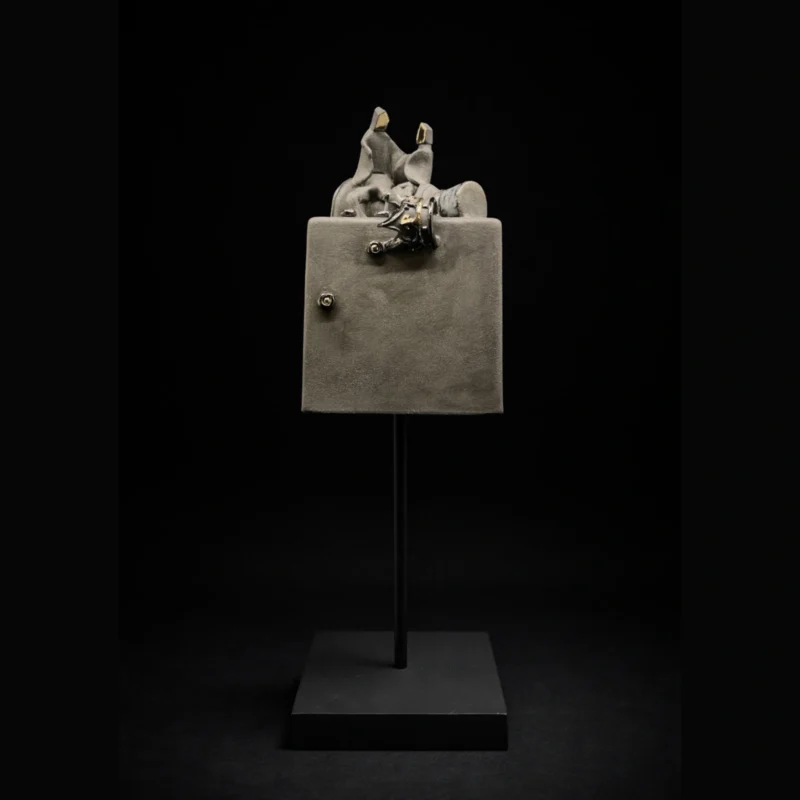
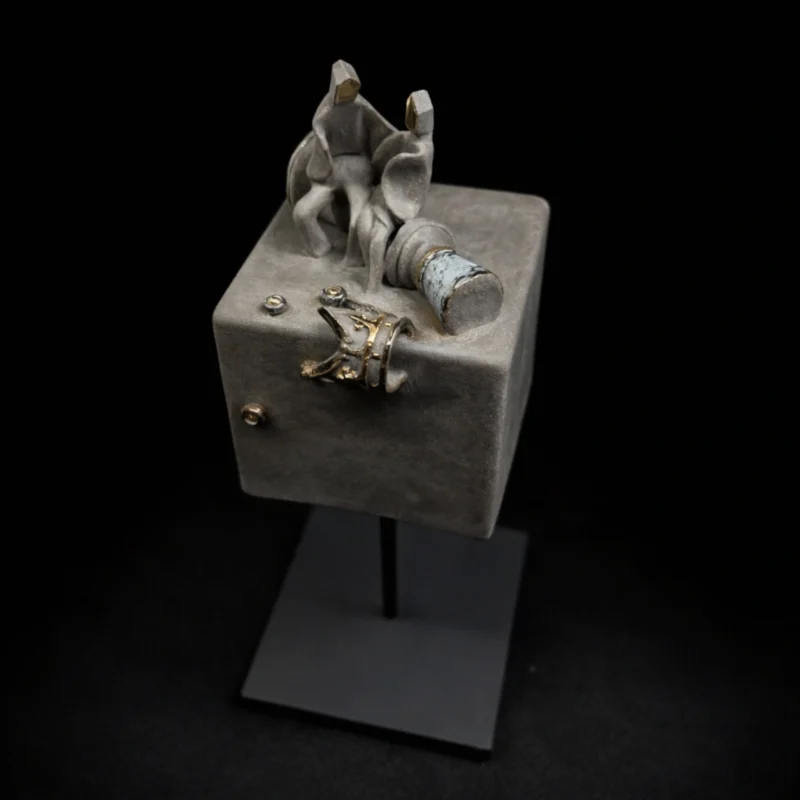
Fine-grained chamotte sculptures, due to their often more porous, often unglazed surface, are more sensitive to abrasion, dirt absorption, and improper wet cleaning; the most important prevention: dry cleaning.
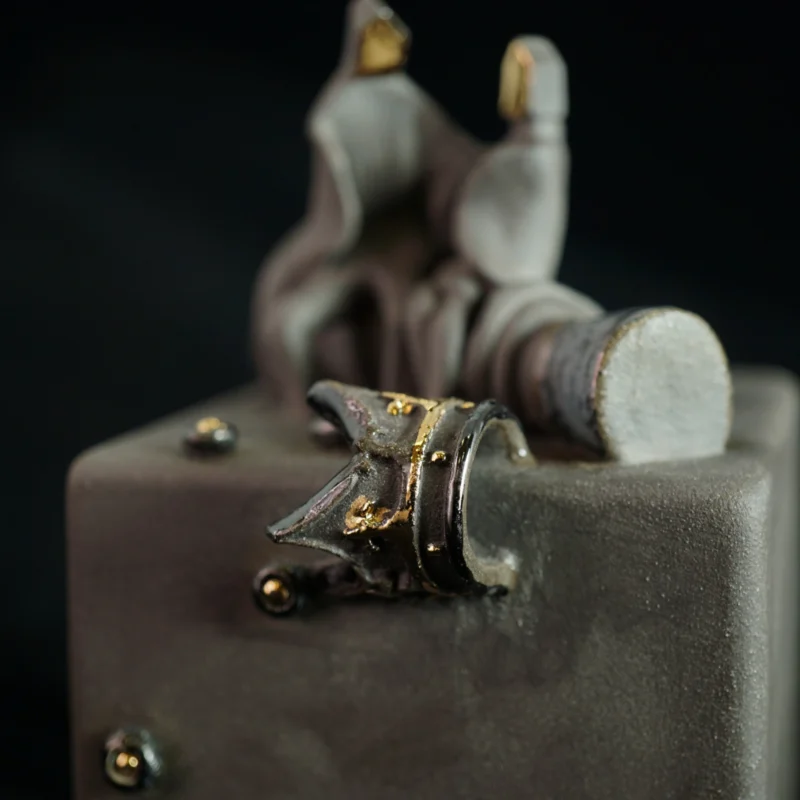
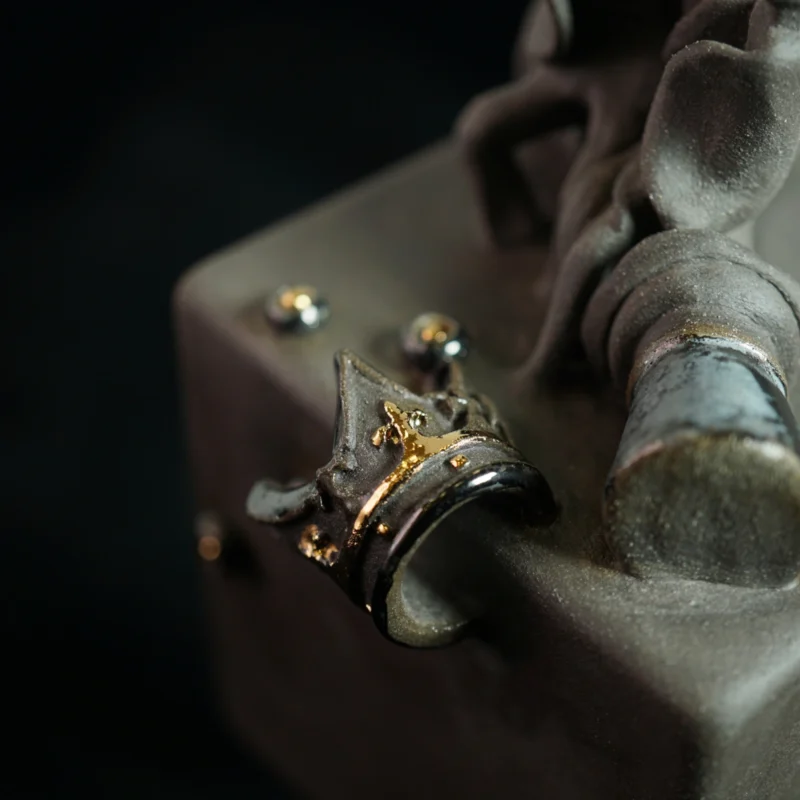
Precious metal lusters (gold, platinum, palladium, etc.) have a thin overglaze coating, fired at a lower temperature, and are therefore more vulnerable to abrasives and friction; it is recommended to maintain such decors gently, by hand, without scrubbing.
MATERIAL PROPERTIES
Chamotte is a high-temperature fired and crushed clay material that is mixed into the mass. It reduces drying/firing shrinkage, helps dry more evenly, and can increase resistance to thermal stresses (especially in larger-shaped items), but can also leave the surface with a more porous and "receptive" texture (especially if unglazed).
This maintenance is intended for fine-grained chamotte sculptures, interior decor items (often more massive forms), which may be unglazed or partially/glazed.
CLEANING
Dry cleaning (basic method): remove dust with a soft brush and „drive“ it into a vacuum cleaner with minimal suction. Do not use rough cloths - this increases the risk of scratches and fading of the decor.
Wet cleaning only exceptionally: „washing“ or soaking is not recommended – especially if there is porosity, old repairs or unclear condition. If it is necessary (e.g. sticky dirt), consult a specialist first.
COMPARISON OF MATERIALS
| Material | Decor | Is it dishwasher safe? | Recommended cleaning | Risks |
| Fine fraction chamotte | There is no luster. | No | Dry cleaning: soft brush, vacuum cleaner with minimum suction; wet cleaning – only exceptionally | Surface stains from grease/touch; scratched |
| Fine fraction chamotte | Precious metal luster (local) | No | Minimal contact: dry, ultra-gentle wiping | Measuring polished areas; damage to decorative coating |
Gilding/luster is a thin overglaze layer, easily damaged by abrasion and will wear away over time if not properly maintained.
LITERATURE
SIO-2. (n.d.). What is grog and what is it used for? https://www.sio-2.com/gb/blog/tips-information/what-is-grog-and-what-is-it-used-for
National Park Service. (2008). Museum handbook: Ceramics. https://www.nps.gov/subjects/museums/upload/08-01_508.pdf
Canadian Conservation Institute. (n.d.). Care of ceramics and glass. https://www.canada.ca/en/conservation-institute/services/conservation-preservation-publications/canadian-conservation-institute-notes/care-ceramics-glass.html
Lithuanian National Museum of Art. (nd). Pranas Gudynas Restoration Center – activities. https://www.lndm.lt/struktura/pgrc_veikla/





She is simply amazing 🙂 exceeded expectations 🙂
Miela, Dovile,
I am so glad, and how good it feels to open the computer in the morning and find a message like this – THANK YOU