ABOUT THE WORK
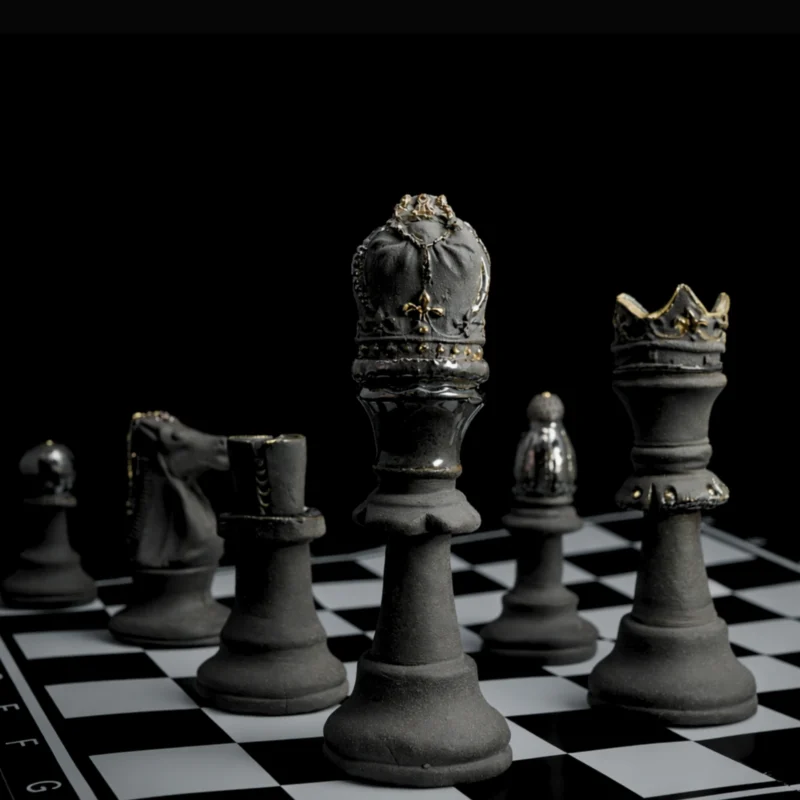
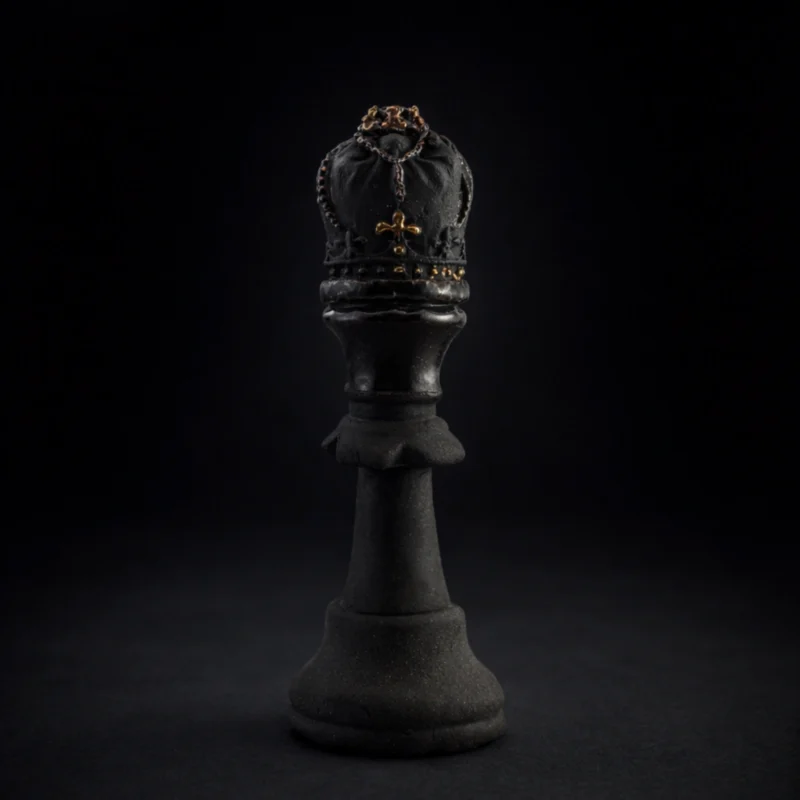
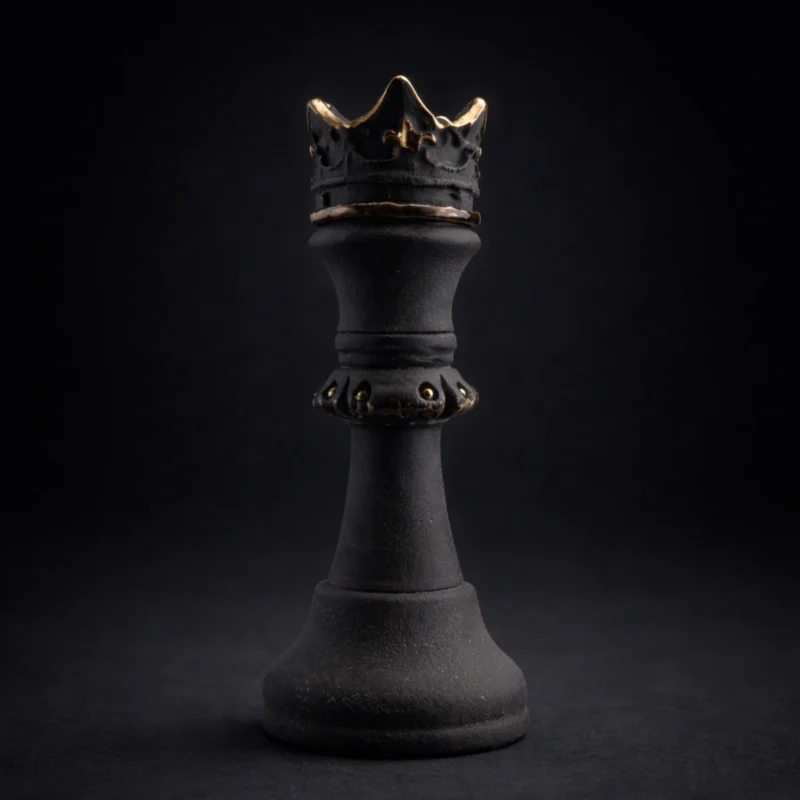
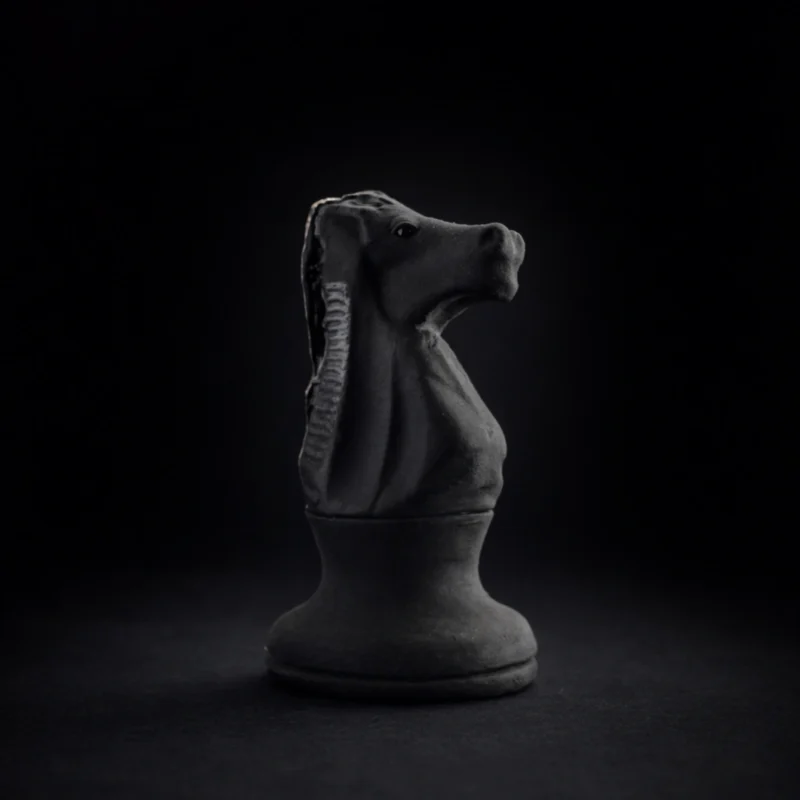
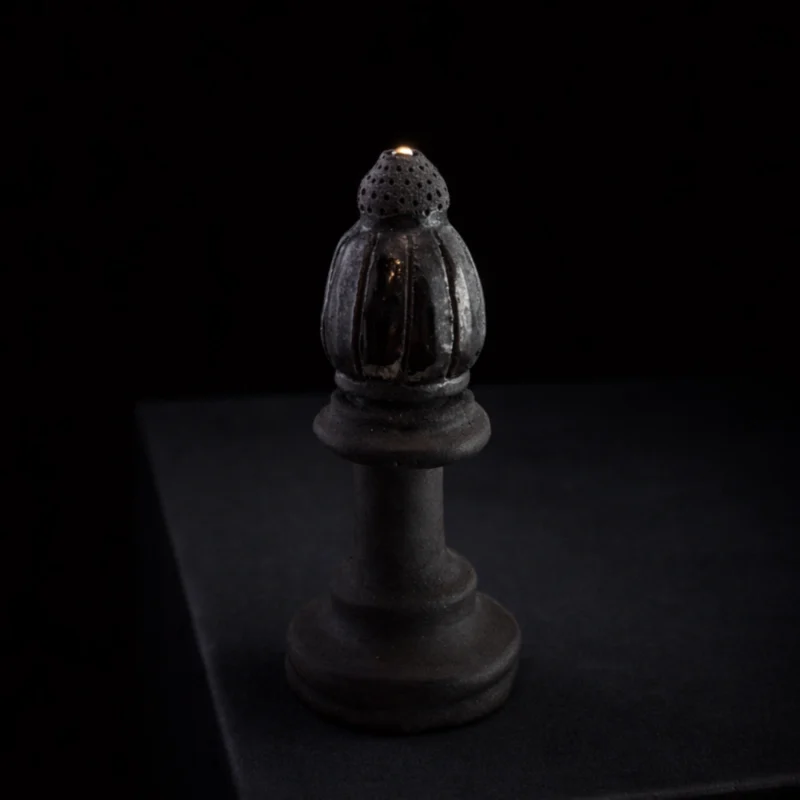
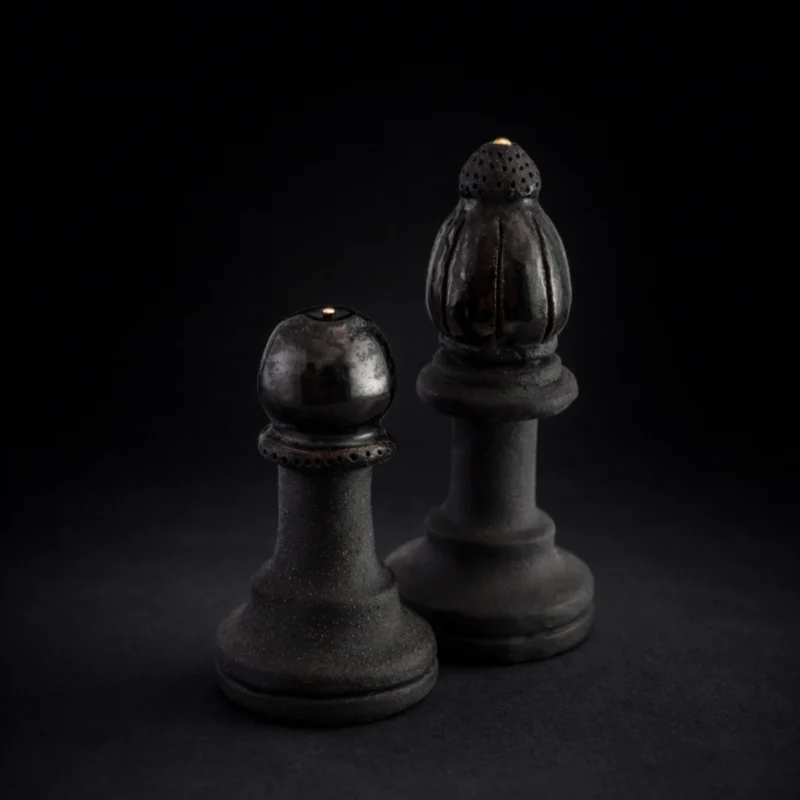
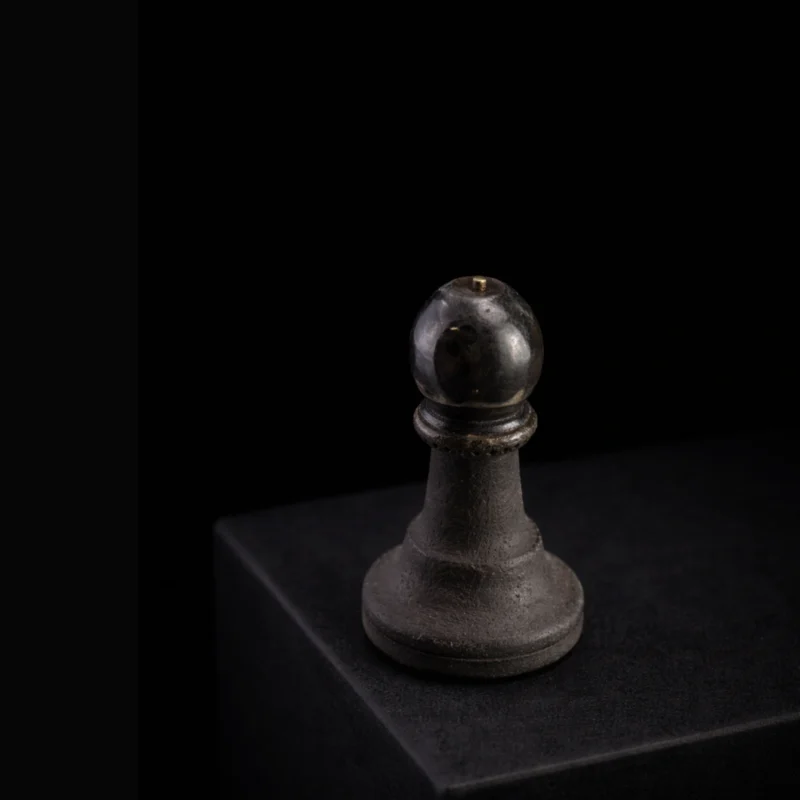
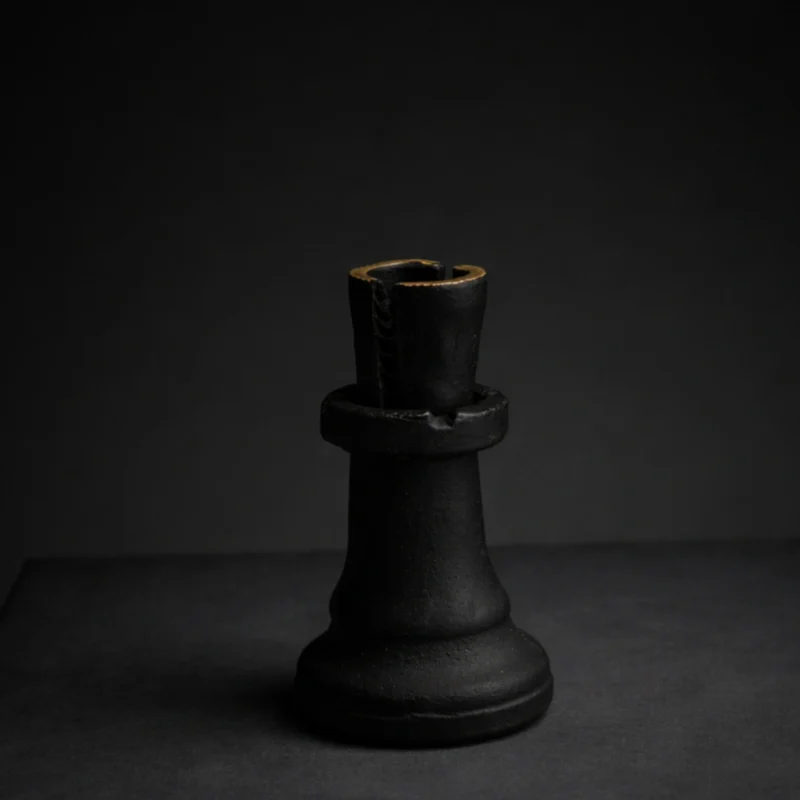
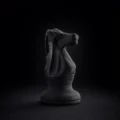
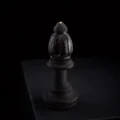
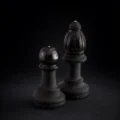
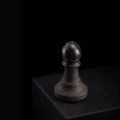
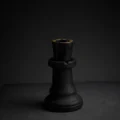
Handmade ceramic chess pieces are an original gaming object that interprets the classic iconography of chess through a sculptural form and the materiality of black ceramic. The figures are elongated, matte, with a roughened surface in places, and gold accents highlight the motifs of crowns, symbols of power, and compositional centers. This is a collection in which the logic of the game merges with the language of small plastic arts.
History
The figures in this set are not created as neutral game elements, but as independent characters. Their silhouettes are emphasized, vertical, with a clear center of gravity. The figures of the king and queen have a ceremonial posture, while the towers and other figures have a more restrained, but no less refined form. The composition is based not on color, but on the tension between material depth and solid volume (instead of the usual division of black and white figures, a dark solid whole is chosen here, in which gold and platinum decor is used to create contrast).
The symbolic dimension is also important in this set. A chessboard always means more than just a game: it speaks of decision, strategy, foresight and the balance of power. Crowns, gold fragments and the more monumental proportions of the pieces reinforce this motif. This is a set in which ornate signs are combined with a restrained, focused posture of the pieces.
Stylistically, the work is close to ceremonial, neo-baroque and neo-gothic aesthetics, but remains contemporary. There are historical allusions here, but they are not copied, but processed into an authorial, sculptural language.
Combination ideas
This collection looks best in a dark, restrained interior. It is close to deep surfaces, wood, stone, glass, metal, and directional lighting. It can be displayed in a library, study, or space where excessive decorativeness is not important, but a strong character of the object.
Occasion
Collectible gift for a chess connoisseur | Office or library accent | Gift for someone who appreciates original art objects
CARE OF CHAMOMILE SCULPTURES AND INTERIOR DECORATIVE ITEMS
Fine-grained chamotte sculptures have a more porous and often unglazed surface, which makes them more sensitive to abrasion, to absorbing dirt and to unsuitable wet cleaning. The most important precaution is dry cleaning.Precious metal lustres (gold, platinum, palladium and similar) are a thin on-glaze layer fired at a lower temperature, so they are more vulnerable to abrasives and friction. Care for such decoration gently, by hand, without scrubbing.
MATERIAL PROPERTIESChamotte is clay that has been fired at a high temperature and ground down, then mixed back into the clay body. It reduces shrinkage during drying and firing, helps the piece dry more evenly and can increase resistance to thermal stress, especially in larger forms. At the same time it can leave the surface more porous and give it an absorbent texture, particularly where the piece is unglazed.These instructions apply to fine-grained chamotte sculptures and interior objects, often larger forms, which may be unglazed or partly glazed.
CLEANINGDry cleaning (the main method): lift the dust with a soft brush and guide it into a vacuum cleaner set to minimum suction. Do not use rough cloths, as they increase the risk of scratches and of the decoration losing its shine.Wet cleaning only in exceptional cases: washing or soaking is not recommended, especially where the surface is porous, where there are older repairs or where the condition is unclear. If it is unavoidable (for example, sticky dirt), consult a specialist first.
COMPARISON OF MATERIALS| Material | Decor | Is it dishwasher safe? | Recommended cleaning | Risks |
| Fine fraction chamotte | There is no luster. | No | Dry cleaning: soft brush, vacuum cleaner with minimum suction; wet cleaning – only exceptionally | Surface stains from grease/touch; scratched |
| Fine fraction chamotte | Precious metal luster (local) | No | Minimal contact: dry, ultra-gentle wiping | Measuring polished areas; damage to decorative coating |
Gilding/luster is a thin overglaze layer, easily damaged by abrasion and will wear away over time if not properly maintained.
LITERATURESIO-2. (n.d.).
What is grog and what is it used for? https://www.sio-2.com/gb/blog/tips-information/what-is-grog-and-what-is-it-used-forNational Park Service. (2008).
Museum handbook: Ceramics.
https://www.nps.gov/subjects/museums/upload/08-01_508.pdfCanadian Conservation Institute. (n.d.).
Care of ceramics and glass.
https://www.canada.ca/en/conservation-institute/services/conservation-preservation-publications/canadian-conservation-institute-notes/care-ceramics-glass.htmlLithuanian National Museum of Art. (nd).
Pranas Gudynas Restoration Center – activities.
https://www.lndm.lt/struktura/pgrc_veikla/





Reviews
There are no reviews yet