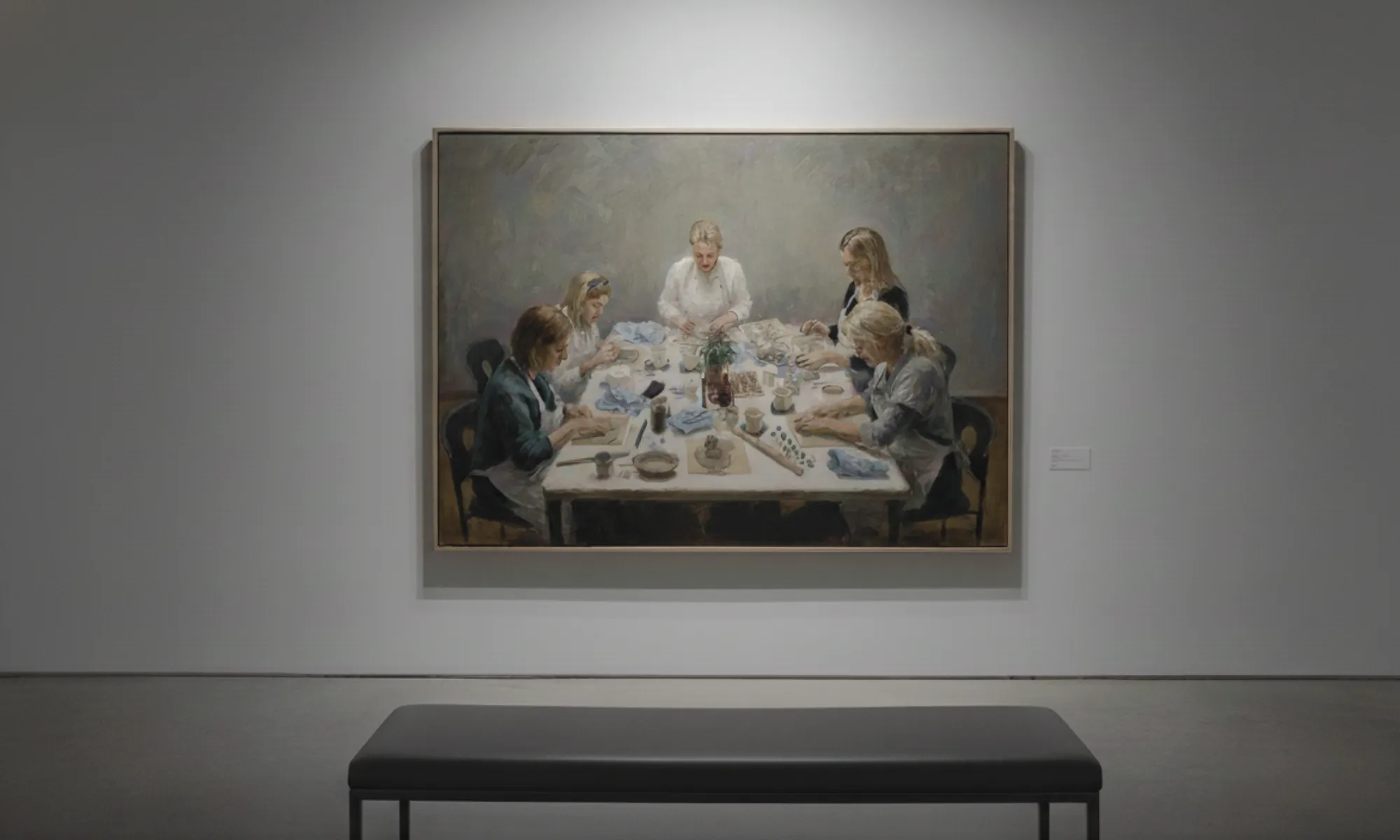

When you touch clay, time seems to freeze. The hustle and bustle of the environment calms down, and your hands slowly awaken the soft, living material. It obeys your touch, but has a strong character – which reminds you that creativity is always a dialogue, not a monologue. Therefore, creative workshops, where a person works with a natural material – clay, are increasingly becoming a space for self-help – a place where you can regain your inner balance and allow yourself to let go of control, at least for a while.
Working with clay is a multi-layered process: it involves action, anticipation, and the inevitable acceptance of imperfection.
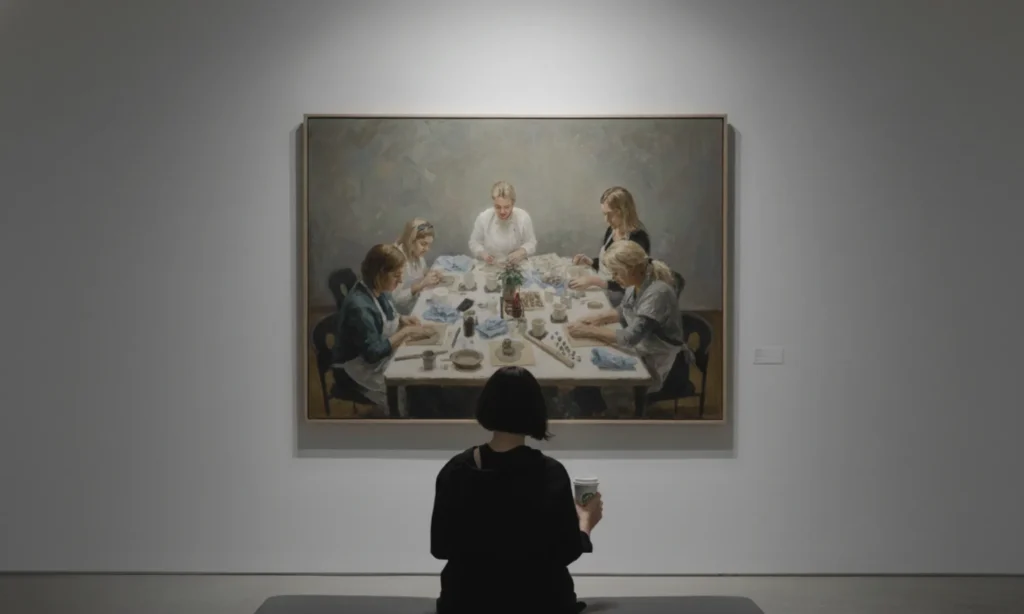
Creative workshop: ceramics as a self-help tool
Working with clay is not just a craft or a creative way to spend your free time. It is a sensory, bodily experience, the effects of which include emotional, cognitive and even physiological levels. Empirical studies show that creating with clay reduces stress indicators, strengthens concentration and improves mood.
For example, a 2023 randomized trial in Hong Kong found that teenage girls who participated in a clay-based creative workshop for several weeks had lower levels of the stress hormone cortisol (Nan, Huang, 2023). This suggests that creative activity is not just an emotional release – it also works on a physiological level, restoring balance between body and mind.
Similar results have been found in other populations. Studies with students (Cody, 2023) have shown that just a few creative sessions significantly reduced their stress, and for people with physical disabilities, such activities increased their feelings of happiness and life satisfaction (Morais et al., 2014). In addition, art psychology researchers (Van Lith, 2020) emphasize that creativity with clay develops fine motor skills, activates sensory systems, and reduces physiological stress.
Such results allow us to speak of ceramics as a form of self-help through conscious action – a process in which a person rediscovers the harmony of body and feelings.
Between acceptance and release
Ceramics teaches us to accept that not everything is under human control. Even for professionals, clay is a capricious partner: too much moisture and the work crumbles, too dry and the clay surface cracks. It is a slow, patient process – the opposite of a culture of urgency, where everything is wanted here and now. This living material, perhaps more than any other, teaches us to manage the need for instant gratification, because the result must be waited for. It is this element of uncontrollability that introduces an important psychological experience – the letting go of control.
As art therapists (Van Lith, Beale, 2025) note, the process of creating with clay is essentially a practice of reconciliation: „There are many stages where something can go wrong, and if you are wholeheartedly attached to one piece and it breaks or deforms, you experience disappointment. The process itself helps people learn to let go.“
When a piece of work falls apart, a person experiences a miniature loss, but at the same time realizes that it is always possible to start over. Such an experience develops psychological flexibility – the ability to accept failure as part of the process, not as the end. This ability is closely related to the restoration of resilience, hope and internal control. In the process of ceramic creation, the moment of „letting go“ occurs not only symbolically. By physically kneading, pressing or shaping clay, the material absorbs the tension accumulated in the body and gives it expression. This is a safe way to release emotions – anxiety, indifference, sadness or even anger – without directing them at yourself or others, but by transforming them in the creative process (Finkelstein, 2020). Many participants in creative workshops testify that after the classes they feel as if they have left part of their thoughts in the clay. This is essentially a reconstruction of emotions accompanied by action – when excess energy takes on creative form.
Creative workshops as a space for introspection
Working with clay captivates a person's attention. It requires hands, eyes, concentration and patience. Every step – from sculpting to the final decorative touches – forces you to be „here and now“. Such a state is similar to meditation, but it arises naturally, without any prior techniques or intentions. A person simply gets involved in the process, and their attention is focused on this moment. This dialogue between body and consciousness strengthens the sense of wholeness. Psychologists say that it is this moment of „grounding“ that helps reduce anxiety – when the mind is no longer distracted between the past and the future, but focuses on the current event. Working with clay becomes not only a creative practice, but also a method of introspection – a way to observe your reactions, test the limits of patience, the desire to control or the tendency to give up.
The aesthetics of imperfection
One of the most important principles of ceramics is to acknowledge imperfection. Clay preserves every trace of touch: on the surface, in cracks, in an unexpected shade. However, this is precisely what gives the work its authenticity. In Japanese aesthetics, this is called wabi-sabi – beauty born of transience and imperfection. Working with clay, a person learns to see value not in perfection, but in the process. A broken vessel can become even more meaningful if you glue it together, and a crack is an important aesthetic cue, as in the kintsugi technique, where the defect is emphasized with gold, highlighting the beauty of imperfection – as if a symbol of psychological renewal (Van Lith, Beale, 2025). Such symbolism also reflects the inner path of transformation: fragility here becomes a sign of strength and authenticity.
A form that embodies what is new, undiscovered, and untouched
The process of creating ceramics – from the first touch to the last decorative accent – reflects the laws of life. Here, will and chance meet, plan and surprise, beginning and inevitable acceptance of the end. Clay teaches flexibility, the ability to transform fragility into power and soften the all-encompassing mechanisms of control of our mind.
Every work becomes a small metaphor: it reminds us that we can reinvent ourselves, to let go of what is no longer needed, used up, or unacceptable. Accepting and letting go is not a sign of weakness, but of maturity. As in ceramics, so in life, by accepting imperfection as a given, we open ourselves to what is new, undiscovered, and untouched.
A creative workshop is a place where clay becomes a material not only for creativity, but also for introspection.
- Van Lith, T. (2020). A qualitative inquiry comparing mindfulness-based art therapy versus neutral clay tasks. The Arts in Psychotherapy, 69, 101665. https://www.tandfonline.com/doi/abs/10.1080/07448481.2020.1841211
- Duckrow, S. (2017). Filmmaking as artistic inquiry: An examination of ceramic art therapy in a maximum-security forensic psychiatric facility (Doctoral dissertation, Lesley University). https://www.researchgate.net/publication/313876098_Filmmaking_as_Artistic_Inquiry_An_Examination_of_Ceramic_Art_Therapy_in_a_Maximum-Security_Forensic_Psychiatric_Facility?_tp=eyJjb250ZXh0Ijp7ImZpcnN0UGFnZSI6InByb2ZpbGUiLCJwYWdlIjoicHJvZmlsZSJ9fQ
- Cody, T. (2023). CLAY AS A MEDIUM FOR JOURNALING MENTAL WELL-BEING: A PROMPT CARD DECK APPROACH. UNIVERSITY OF FLORIDA. https://ufdcimages.uflib.ufl.edu/AA/00/11/20/25/00001/Thomas_Cody.pdf
- Nan, J. K. M., Huang, X. S., Kang, M.Y. (2023). Effects of clay art therapy on emotion regulation and hair cortisol concentration for youth with emotional problems. Art Therapy, 40(3), 1–9. https://www.researchgate.net/publication/370912400_Effects_of_Clay_Art_Therapy_on_Emotion_Regulation_and_Hair_Cortisol_Concentration_for_Youth_With_Emotional_Problems
- Morais, A. H., Roecker, H. S., Salvagioni, D., Eler, G. J. (2014) Significance of clay art therapy for psychiatric patients admitted in a day hospital. Archives of Psychiatric Nursing, 32(1), 128–138. https://pubmed.ncbi.nlm.nih.gov/25229912/
- Aydın, M., Kutlu, F. Y. (2021). The effect of group art therapy on loneliness and hopelessness levels of older adults living alone: A randomized controlled study. Florence Nightingale Journal of Nursing, 29(3), 271-284. https://www.researchgate.net/publication/351284722_The_Effect_of_Group_Art_Therapy_on_Loneliness_and_Hopelessness_Levels_of_Older_Adults_Living_Alone_A_Randomized_Controlled_Study
- Van Lith, T., Beale, C. (2025). A grounded theory exploration of sensory and kinaesthetic engagement with clay. Journal of Creative Arts Therapies, 20(1), 1–18. https://static1.squarespace.com/static/62cb6c4f3dd8c74a52efdb24/t/68e867d0174a5b1932e2f556/1760061392970/A-25-VanLith-Beale.pdf
- Finkelstein, J. A. (2020). 7 Unexpected ways clay is therapeutic. https://www.psychologytoday.com/us/blog/demystifying-talk-therapy/202003/7-unexpected-ways-clay-is-therapeutic