Artistic Jewelry: The Language of Symbols and Their Implied Meanings
Every piece of jewelry – whether it’s an ancient amulet or a contemporary designer’s creation – tells a unique story. It’s not just an accumulation of materials like gemstones, metal, or porcelain. It’s also a contribution of symbols, emotions, and experiences woven into the fabric of human existence.
Our primal desire to adorn ourselves seems to transcend the boundaries of aesthetics and transform into a deep search for identity and meaning.
Jewelry is a "living cultural heritage" - a form of communication that connects us to the past, defines the present, and even whispers about the future.
Is it true that works of art contain not only beauty, but also the entire history of humanity?
In this article, I invite you to embark on a journey through the world of jewelry, where jewelry becomes a mirror of identity, a beacon of resilience and hope, a bearer of semiotic language, and a keeper of memory. We will delve into how these artistic works have changed and evolved over the centuries, becoming not only a decoration for the body, but also a tool for philosophical reflection, social dialogue, and personal expression.
- Contents
- Artistic Jewelry: The Language of Symbols and Their Implied Meanings
- Jewelry as a mirror of identity: who we are and who we want to be
- Artistic jewelry – a beacon of resilience and hope: a philosophy of survival
- Decoding the Language of Jewelry: Semantics and the Maze of Symbols
- Jewelry as a bearer of cultural memory: echoes of the past in the present
- Jewelry in the context of contemporary art: conceptuality, narratives, participatory art
- Semantics and symbol analysis of artistic jewelry
- Jewelry as a bearer of cultural memory
- Jewelry in the context of art until the beginning of the 20th century
- Summary:
Jewelry as a mirror of identity: who we are and who we want to be
Since ancient times, jewelry has been a powerful tool that has helped individuals and communities not only adorn their bodies, but also express themselves – their belonging to a culture, tradition, social group, or even their personal philosophy. It has acted as a calling card, testifying to inner attitudes and external signs.
Anthropological research emphasizes that jewelry is more than decoration; it is a „window“ into a society’s beliefs, practices, and self-concept. For example, the bridal jewelry of Tuareg women or the silverware of Berbers in North Africa have long conveyed information about marital status, wealth, and social hierarchy.
In the age of globalization, where cultures are intertwined and constantly changing, contemporary artists consciously incorporate ethnic motifs into their works – not only for aesthetics, but also as a sign of „where I am from.“ Elements such as traditional patterns, symbols, or specific materials (e.g. amber in Lithuania or the claddagh ring in Ireland) become a visual sign of heritage.
As art critic Dr. Jurgita Ludavičienė aptly notes, each contemporary Lithuanian jewelry piece is like a „letter from the world of our identity,“ telling us about what is most important to us. The values we live by and through which we see the world. Organic materials, interpretations of historical symbols, and the meaning of amber in the works of Lithuanian artists testify to a living connection with national identity.
In modern jewelry, a piece of jewelry becomes not just a status symbol, but a teller of personal history and values.
Artistic jewelry – a beacon of resilience and hope: a philosophy of survival
Artistic jewelry can embody unbreakable resilience – both personal and collective – in the face of difficult experiences. In contemporary art and design practice, jewelry increasingly tells stories of survival, becoming symbols of protest, strength, and hope.
For example, artist Dana Rogozinski's Holocaust memorial jewelry line, engraved with concentration camp numbers, is not only an artistic act but also a profound emotional statement. Such pieces evoke strong emotions, becoming an intimate way to stay connected to one's lived family history. The jewelry here acts as a talisman of remembrance and resistance, giving the owner a sense of strength:
„"They tried to take away our identity, but we wear it with pride."“
Survival is also an art!
Contemporary jewelry designers are also responding to social challenges by creating „empowering“ jewelry. Such pieces carry coded messages about human rights, ecology, or gender equality. While there is a risk that such symbols may become a superficial „resilience fashion“ trend, when used properly they serve as a daily reminder and empowerment.
A wearable symbol becomes a daily companion: it reminds us of the struggles we have endured, invites us to continue the journeys we have begun, and inspires us not to give up. It is a materialized hope that can be worn on our body.
Decoding the Language of Jewelry: Semantics and the Maze of Symbols
Behind every shape, color, or material lies a hidden language of jewelry – a semantic labyrinth explored by semioticians. Jewelry functions as a sign: it has a physical expression (shape, material, texture – say, the fragility and elegance of porcelain) and a deep cultural content that is interpreted by both the wearer and the observer.
Charles Peirce's theory of the sign helps to reveal how certain elements of artistic works – the circle of a ring, the motif of a chain, the color of a stone or the shade of a glaze – function as an icon, an index1 or symbol. The wedding ring becomes a conventional symbol in many cultures, clearly associated with marriage. And a porcelain pendant with a tree of life motif can take on an indexical meaning – indicating the wearer’s connection to nature or desire for growth.
In contemporary design research, semiotic analysis reveals how signs from different cultures are integrated into artistic jewelry, giving them new layers of meaning. Chinese calligraphy motifs, organically woven into jewelry, become cultural symbols. And Persian animal motifs from the Achaemenid era, today rephrased in conceptual works, quote historical „texts“, acquiring a new context.
The ideas of Roland Barthes and Umberto Eco help us understand that the "language" of jewelry encompasses not only the symbolism of materials (e.g. porcelain as a sign of elegance, fragility, but also resilience), but also the syntax of forms - a certain visual "sentence" created from the harmony of elements. In addition, contextual semantics is also important: the same piece of jewelry can mean something completely different in different cultures.
Analyzing exhibitions of contemporary conceptual jewelry, one can create a kind of „catalogue of symbols“: keys, wings, chains, images of wounds – all of which convey narratives about freedom, fragility, oppression, or rebirth. Artistic jewelry becomes a coded language in which material, form, and context together create meanings. They are recognized by those who learn to „read“ this language.
Jewelry as a bearer of cultural memory: echoes of the past in the present
The material nature of objects gives jewelry an extraordinary power to preserve memory and connect the past with the present. Artworks become like portable memorials, preserving history, telling the story of ancestral experiences or important events. Studies of cultural memory (J. Assmann, M. Halbwachs) emphasize that certain artifacts embody the past experiences of a group, and jewelry objects are distinguished as particularly intimate carriers of memory, because they are often passed down from generation to generation. They are like time capsules worn on the body.
Contemporary designers and artists are consciously creating jewelry that immortalizes stories. The aforementioned case of Dana Rogozinski's Holocaust memorial jewelry is not only art, but also a participatory memory project that invites the wearers and those around them to remember and talk about the tragedy.
Another example is conceptual jewelry projects, where artists incorporate archival materials (old photographs, letter excerpts, parts of relics) or even biological material (dried flowers from a wedding, a lock of baby hair in a locket) into artworks. Such jewelry becomes „portable archives,“ directly storing memory in a physical object.
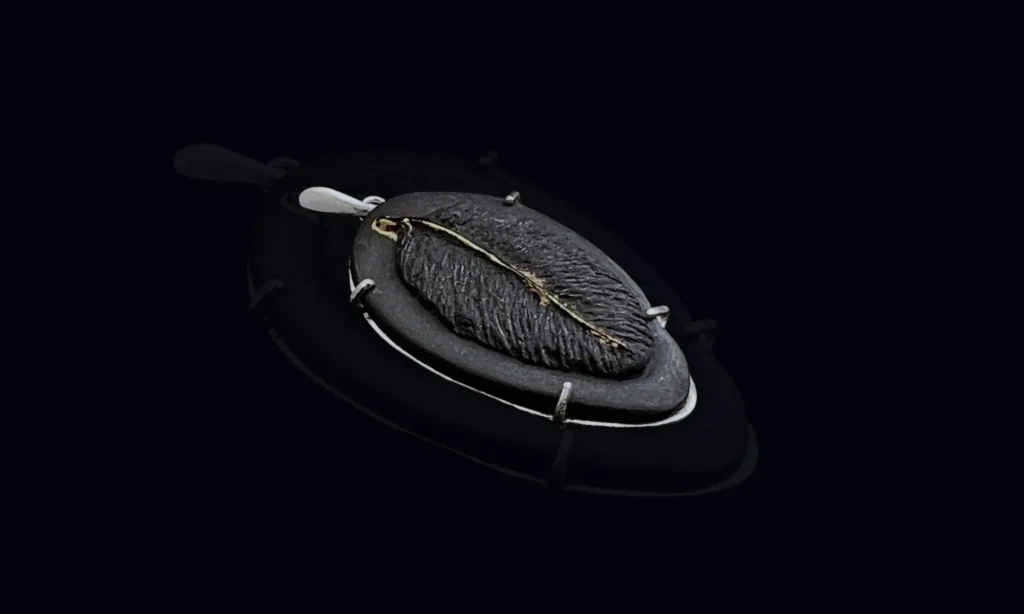
Priscila Arantes (2020) argues that jewelry can be a „mediator of a place full of memories,“ connecting experiences of different eras and cultures across time and space. A porcelain pendant engraved with a rare print of a plant leaf can become not only a personal memory of a specific place, but also a deeper symbol, connecting the wearer to the history of nature and its fragility.
The Metropolitan Museum of Art's exhibition "Jewelry for America" (2019) revealed that early American jewelry was often created as sentimental commemorative objects - witnesses to love, mourning, success, or remembrance.
This tradition is transforming in the 21st century: modern jewelers are creating interactive "memory jewelry" that can hold digital photos or audio recordings, extending the function of the artwork as a memory carrier into the digital era.
The meaning of jewelry for memory is not automatic – it created through ritual: passing it on to posterity, displaying it on certain occasions, creating stories about it. Thus, jewelry acts as a script, brought to life by the deconstruction of human memory. It is an object that can tell what others have not told.
Jewelry in the context of contemporary art: conceptuality, narratives, participatory art
In the 21st century, jewelry has resolutely entered the field of contemporary art – it is no longer perceived solely as an applied decorative art or a luxury item, but also as a carrier of a creative concept, a critical discourse. Research shows that conceptual jewelry has expanded the functions of jewelry: contemporary artists treat jewelry as containers of ideas that raise questions, tell stories and even provoke social dialogue. According to researcher Ch. Scarpitti, contemporary jewelry today often becomes „narrative and relational entities“ that not only decorate, but also communicate, embody intangible values and invite the viewer to think. In other words, jewelry becomes an object-thought: its „unnecessity“ in a practical sense turns into the most important value, because it opens up space for the communication of ideas and the creation of knowledge.
Narrative jewelry
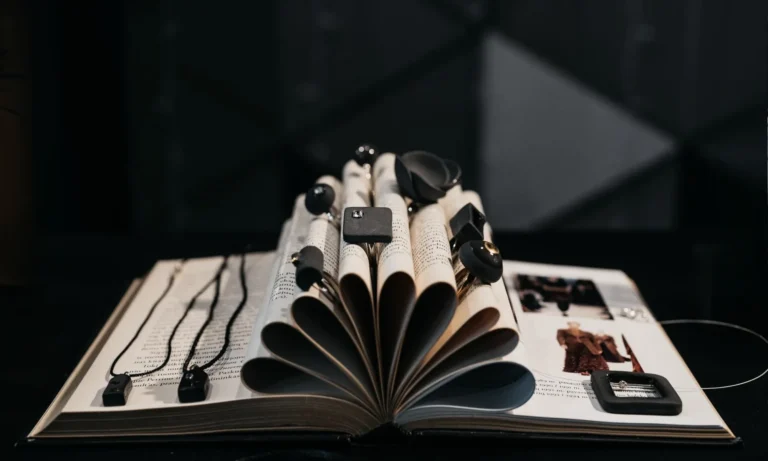
This is a direction in which artists integrate a clear narrative or concept into their works. For example, an artist may create a brooch made of miniature books – such a brooch carries a metaphorical narrative about the burden of knowledge or tells a specific story, each booklet becoming part of a personal archive. Participatory jewelry is another phenomenon in contemporary art that has been analyzed by critics. Here, jewelry is created or completed by involving the audience, turning the creative process into a communal experience.
Artists such as Yuka Oyama’s „Schmuck Quickies“ project invite passersby to co-create, allowing them to compose their own improvised jewelry from the materials provided. This relates to the paradigm of „relational art“ described by Nicolas Bourriaud, where the value of art lies in the relationship it creates between people. In the field of jewelry, this manifests itself in the practices of “encounters through jewelry,” where the object itself is created or given meaning by human interaction.
Craft theorist Glenn Adamson emphasizes that jewelry has now broken free from the framework of purely material value – „luxury“ is no longer associated with the material alone, but with the originality of the idea and the conceptuality of the craftsmanship. In the era of modernism (in the context of Adolf Loos’s critique of „Ornament and Crime“), jewelry makers reacted against the devaluation of ornamentation by beginning to give meaning to ornament, rehabilitating it as an intellectual object of discourse.
Contemporary jewelry can simultaneously comment on political issues, ecology (using recycled materials to highlight the problem of consumerism), and technology (for example, 3D printed jewelry challenges traditional craftsmanship). Today, jewelry can be a gallery exhibit and part of a community project, and its „wearing“ turns into a performance or social action, proving that an artwork is a living, constantly changing, and meaning-generating phenomenon.
Historical research: the spiral of time and the evolution of handmade jewelry
Looking back, it becomes obvious that many of the themes discussed in contemporary art jewelry have deep historical roots – only their expression was different back then: not through conceptual narratives, but through symbols, materials, and function.
In the 19th and early 20th centuries, jewelry as a research subject was still in its infancy, mostly in the fields of ethnography, archaeology, and art history. Researchers of that time mainly documented the ethnic origin, social status, or ceremonial purpose of jewelry, thus indirectly revealing its identity significance.
Although concepts such as "narrative jewelry" or "bearer of cultural memory" were not yet in use at that time, it is clear that these dimensions were felt - they were simply not yet named.
Jewelry as an expression of cultural identity
Early travelers and colonial anthropologists often recorded the adornment traditions of various peoples, in which jewelry marked tribal affiliation, regional identity, or ceremonial functions. Charles Darwin in his work2 „The Origin of Man (1874) noted the universal human passion for adornment, linking it to sexual selection and aesthetic perception. Although he did not directly use the concept of cultural identity, his observations laid the foundation for the understanding that adornment is a universal cultural feature that takes on different meanings in different societies.
The national revivals of the late 19th and early 20th centuries led to to be interested in the heritage of national jewelry. In Lithuania, figures of the national movement, such as Jonas Basanavičius, encouraged the cultivation of traditional clothing and jewelry as symbols of Lithuanian identity. Amber acquired the status of Lithuanian identity during this period – from a geological formation, it turned into a mythological embodiment of Lithuanianness, associated with the legend of Jūratė and Kastytis and images of the amber palace in the folk consciousness. Ethnologist Pranė Dundulienė's (mid-20th century) research on Lithuanian folk ornamentation and symbols, although more focused on mythological motifs, revealed how the signs of the sun, the serpent, or the tree of life also appear in jewelry, giving meaning to national self-consciousness.
A visual sign of social status
From a sociological perspective, Thorstein Veblen formulated the concept of conspicuous consumption in his work The Theory of the Leisure Class (1899), explicitly referring to luxury goods – including jewelry – as visual signs of social status. Although this insight is focused on the economic elite, it also indirectly defines an identity dimension: the upper class formed a distinctive identity through the aesthetics of luxury.
At the end of the 19th century, jewelry began to be studied as a representation of social status – diamonds and pearls symbolized the aristocracy, while folk jewelry was more often associated with the peasantry or the townspeople.
Henri Vever's three-volume work on 19th-century French jewelry (1908–1914) notes that under Napoleon III, jewelry became an integral part of the culture of the court. Jewels encrusted with precious stones not only reflected aesthetic taste, but also shaped women's identities as signs of loyalty to the empire. Thus, jewelry became not only a decoration, but also a political symbol, integrated into the system of court representation.
A symbol of resilience or survival
History is full of examples of jewelry becoming symbols of resistance, protest, or survival. At the turn of the 19th and 20th centuries, when societies fought for political rights and cultural identity, artistic works took on the function of signs of identification and symbols of solidarity.
The most striking example is the jewelry of suffragettes in Britain in the early 20th century. Participants in the women's rights movement wore special items with the colors of the movement - green, white and purple. These colors symbolized "Hope, Dignity, Self-Respect" and at the same time encoded the slogan "Give Women Votes". The jewelry acted as a secret sign of support, uniting women in a common struggle, and each such item became an emblem of political resistance.
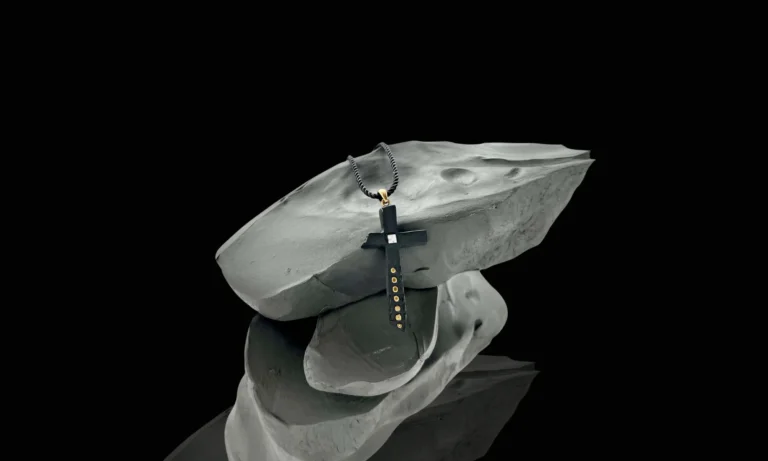
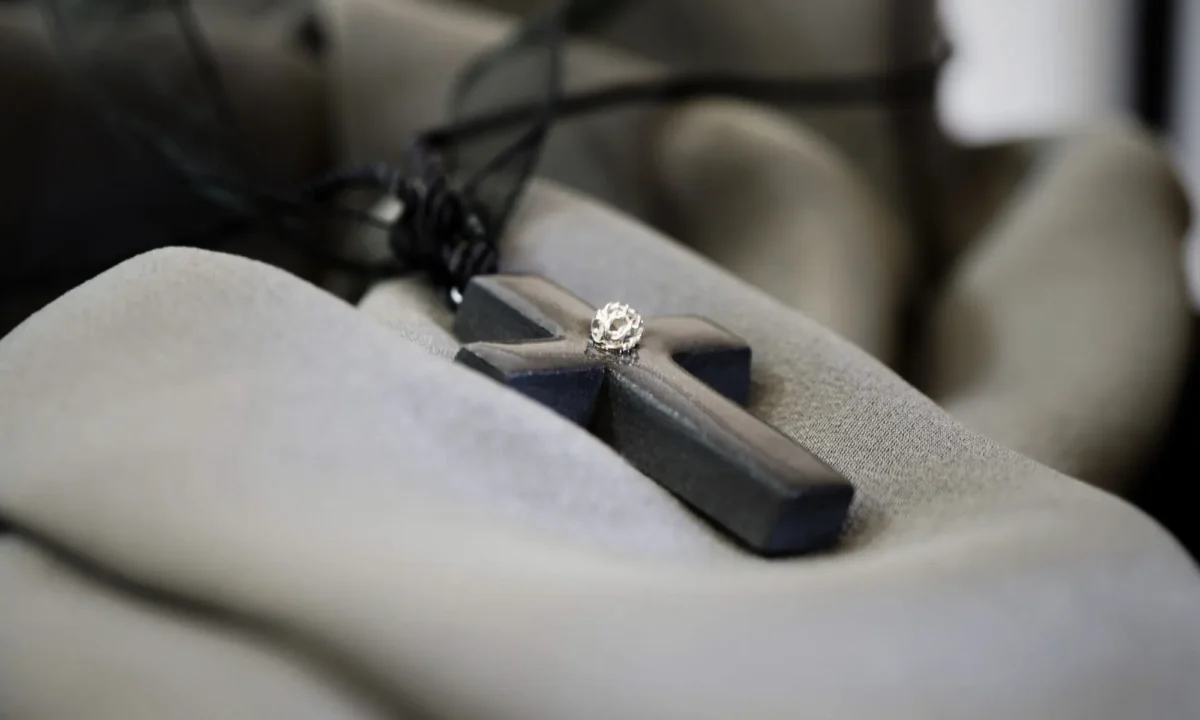
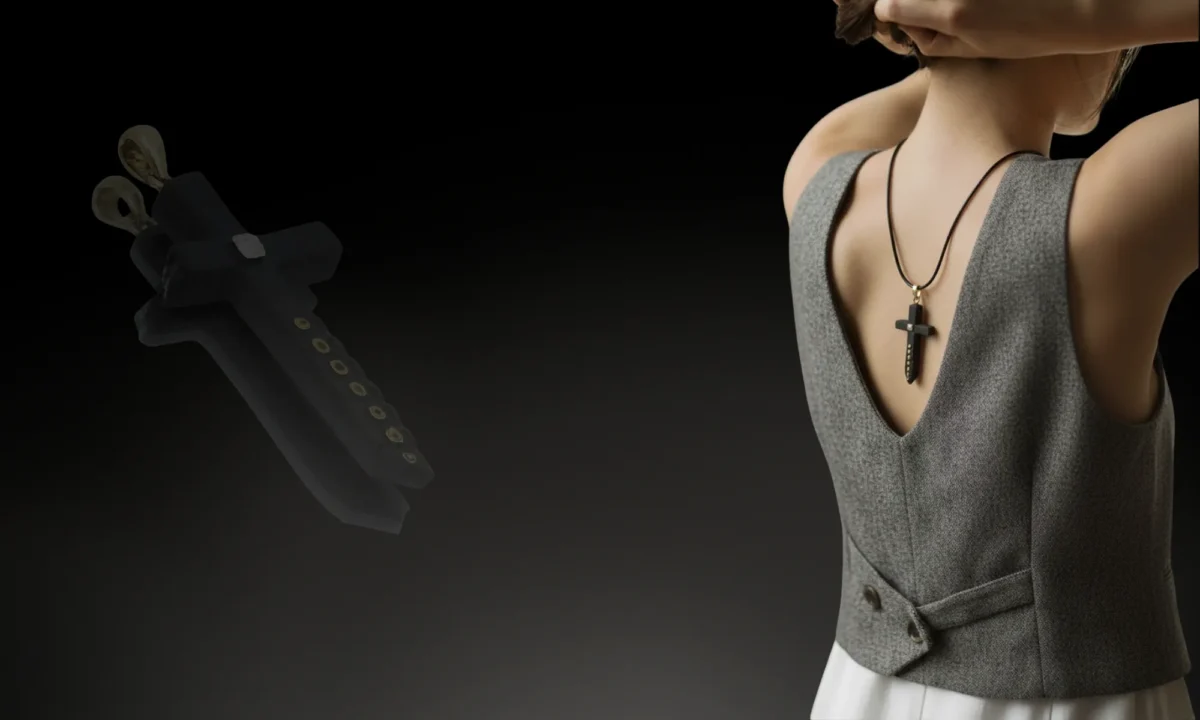
Another historical example is religious jewelry in the underground, for example during the Soviet occupation of the Baltic States. People secretly wore crosses or national symbols, thus silently expressing resistance. Family relics preserved in exile became talismans of survival – providing hope and reminding of the lost world of home.
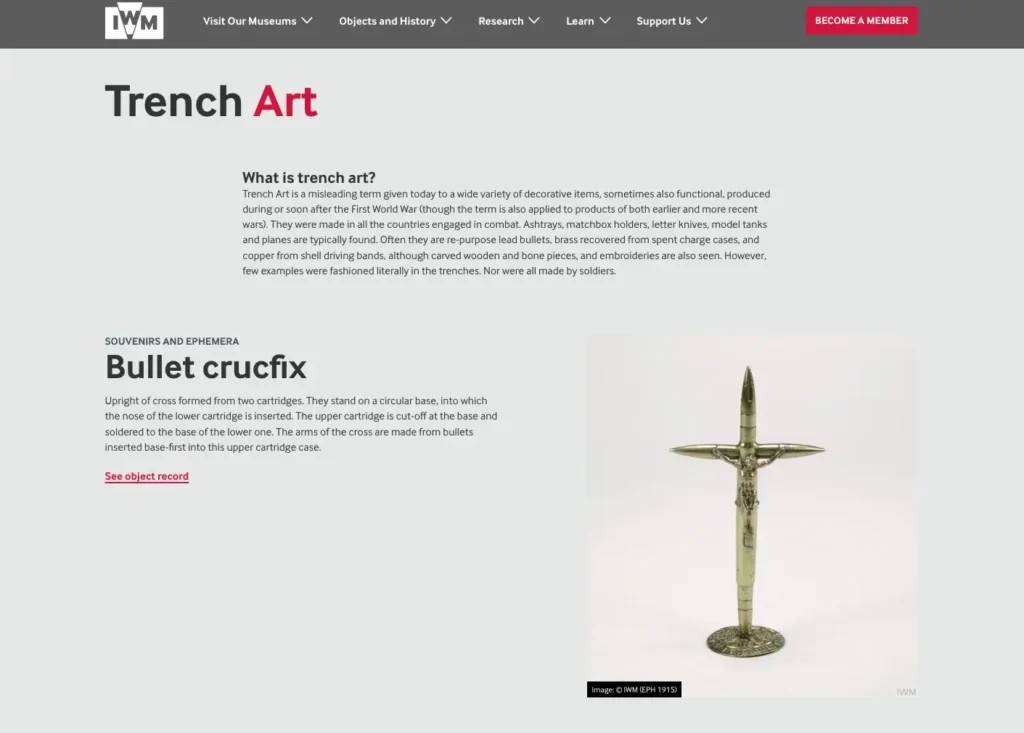
During World War I, so-called "trench jewelry" emerged, made by soldiers themselves from shell casings, bullets, or other remnants of war. It was a way to tame the horrors of war by transforming the instruments of death into aesthetic objects and symbolically affirming the victory of life over destruction.
These examples show that jewelry has always carried within it a deep personal and collective narrative of resilience.
Semantics and symbol analysis of artistic jewelry
Although semiotics as a science began to take shape only in the late 19th and early 20th centuries, the symbolism of jewelry was already actively interpreted at that time, usually from a folkloric or mythological point of view. Victorian ethnologists and art historians associated motifs with ancient mythology: the Egyptian scarab was interpreted as a symbol of resurrection and eternity. Archaeologists, discovering ancient jewels, interpreted them through the prism of function and symbolism: Heinrich Schliemann, who discovered the Trojan treasure, considered jewelry to be royal insignia, and ancient Egyptian amulets were perceived as protective signs.
In the early 20th century, researchers in Eastern Europe analyzed Slavic and Baltic jewelry ornaments as symbol systems, attempting to create a kind of "dictionaries" in which the six-pointed star meant the connection between earth and sky, and the serpent motif meant the protection of fertility. These interpretations, although sometimes speculative, indicate an early desire to understand jewelry as signs with certain meanings.
Georg Simmel, in his 1904 essay On Fashion, emphasized that jewelry reflects social relations: it serves two poles – separation and conformity. Thus, the meaning of jewelry is twofold: the junction of individualism and collective identity.
Art Nouveau jewelry (c. 1890–1910) was famous for its extremely rich symbolism: images of flowers, animals, and mythological creatures conveyed ideas about nature, femininity, and the cycles of life. This shows that even before the advent of formal semiotics, jewelry symbols were perceived and analyzed as a form of cultural communication.
Jewelry as a bearer of cultural memory
Throughout history, jewelry has often served as a vehicle for memory in sentimental culture and the preservation of national heritage. People intuitively understood that an artistic work could preserve a memory or history. This is evidenced by mourning jewelry, family heirlooms, and commemorative items of historical events.
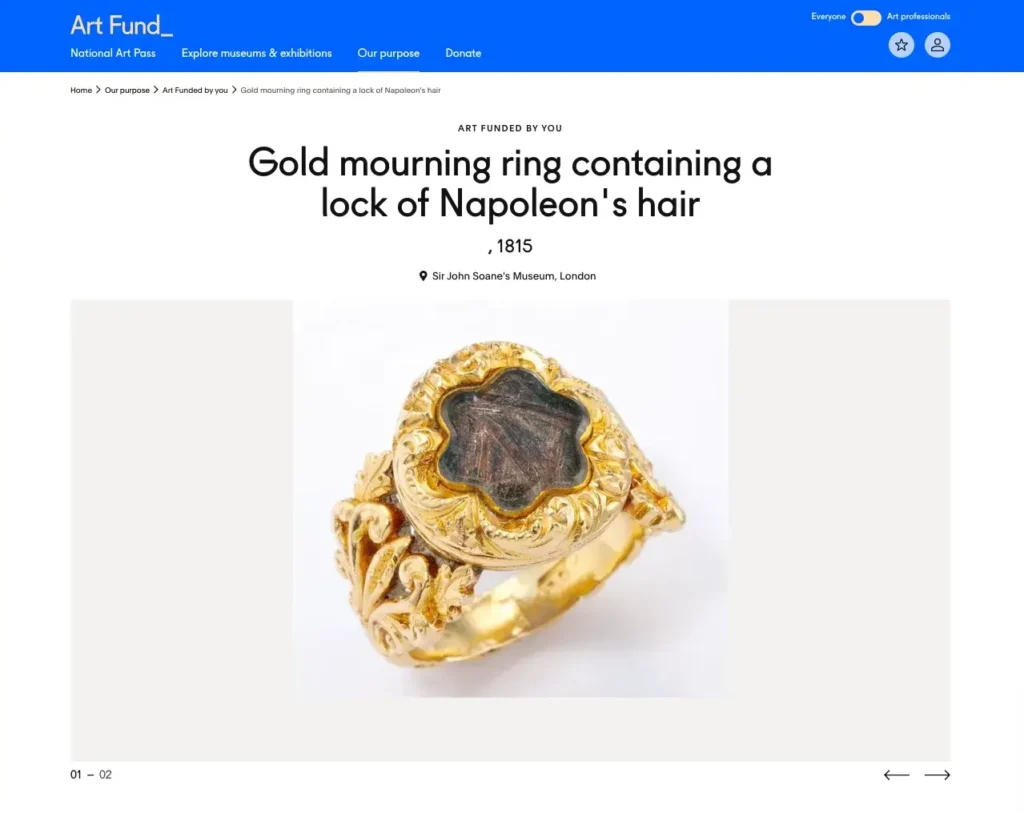
During the Victorian era (1837–1901), especially after the death of Prince Albert in 1861, jewellery became a symbol of collective mourning and remembrance. Queen Victoria wore black mourning jewellery for the rest of her life, setting a social trend. Black items of jet or onyx, decorated with the initials of the deceased, locks of hair or mourning symbols, became a sign not only of personal loss but also of public communication.
Family heirlooms – rings, necklaces or brooches passed down from generation to generation – acquired the status of a witness to history, along with stories about genealogy. After the death of Napoleon Bonaparte in 1821, locks of his hair were incorporated into medallions and rings, which became part of the memorial cult and kept the emperor’s memory alive in the collective consciousness. In the late 19th and early 20th centuries, commemorative brooches and medallions, produced for various occasions, such as the 100th anniversary of the US Independence (1876), demonstrated that jewelry could become a messenger of a historical event.
Jewelry in the context of art until the beginning of the 20th century
For a long time, until the mid-20th century, jewelry was classified as a decorative applied art and considered a "lower" art form compared to painting or sculpture. However, the Art Nouveau movement (c. 1890–1910) began to blur this line.
Renowned jewelers such as René Lalique, Georges Fouquet and Peter Carl Fabergé achieved international recognition as artists, not just craftsmen. Their works were exhibited alongside other art forms at art exhibitions: at the 1900 Paris World Exhibition, Lalique's jewelry was presented as "works of art inspired by poetry and nature.".
This was a turning point that marked the beginning of a conceptual approach, in which jewelry was given not only material value but also artistic value, including narratives and mythological allegories. Symbolist critics such as Charles Blanc wrote that jewelers "breathed life into metal and gem, giving them a soul through artistic vision," thus recognizing jewelry as a vehicle for the artist's ideas.
The Art Deco style (circa 1920–1930), characterized by straight-line geometry, reflected the spirit of the technological age – in contrast to the romantic, nature-inspired Art Nouveau pieces. Thus, the meaning of jewelry often lay in its style, which symbolized the ideas of a particular era.
In summary, by the beginning of the 20th century, jewelry already functioned as art objects with a narrative dimension, and audiences and critics recognized these narratives, laying the foundation for what theorists later identified as narrative, conceptual, and participatory jewelry.
Summary:
Artistic jewelry as a reflection of the human spirit
This review has revealed the wealth of research and development into jewelry as a symbolic language. From ancient times to the present day, jewelry has served not only as a means of adorning the body, but also as a powerful, multidimensional means of communication, containing deep cultural, social, and personal meanings.
Modern research
It revealed that jewelry has become a complex phenomenon: it expresses cultural identity in a global context, often becoming a crossroads between tradition and individuality. It testifies to resilience and survival in difficult times, both in projects of remembrance of historical traumas and in everyday symbols of empowerment, becoming materialized hope.
Artworks function as a complex system of signs and meanings, a "dictionary of signs" read by semioticians, and carry cultural memory, transmitting inherited stories, connecting people with the past. It is especially noteworthy that in the 21st century, jewelry has integrated into the discourse of contemporary art: jewelry is equated with a work of art, which accommodates conceptuality, narrative, and sometimes - the participation of the viewer in creating meaning.
The "unnecessity" of a piece of jewelry, in a practical sense, paradoxically becomes its greatest value, opening up space for the communication of ideas and the creation of knowledge.
Historical perspective
It is pointed out that many of these themes have deep roots in 19th and early 20th century research and jewelry practice itself. Even then, jewelry:
– marked group identity (national jewelry described by ethnographers, suffragette brooches);
– served commemorative purposes (Victorian mourning jewelry, family heirlooms);
– had symbolic meanings (ornamentation of mythological motifs);
– transcended the boundaries of utilitarianism in pursuit of the status of art (Art Nouveau „artistic ornament“ as a bearer of allegories).
However, current research provides these topics with a new theoretical framework: semiotics is used to more clearly clarify the „grammar“ of jewelry, symbolic anthropology – their role in rituals and worldviews, and cultural studies – a broader context, for example, revealing how jewelry bears witness to stories of oppression and resistance.
The main researchers and sources represent an interdisciplinary field: from academics (sociologists, anthropologists, semioticians) to artists and curators who combine theory with practice. The research methodologies are also diverse: archival and artifact analysis, interviews and field research, artistic research practice and theoretical speculation that allows for a deeper look into the essence of the jewelry.
Critical aspects
When examining jewelry as a language of symbols, it is important to maintain a balance between the beauty of the object and its meaning. Too much focus on symbolism can push aside the aesthetic, sensory experience of the jewelry, while emphasizing the material value alone impoverishes the understanding of jewelry as a cultural text. Therefore, current research seeks a holistic approach – combining the analysis of form, function and meaning, including both the intention of the creator and the interpretation of the viewer/wearer.
Future research envisages an even deeper subject-matter dialogue, connecting specialists from different fields – from neuropsychologists studying emotional reactions to jewelry to social anthropologists examining the jewelry „languages“ of contemporary subcultures.
In summary, jewelry proves to be a dynamic symbolic system, where personal and collective experience, past and present, beauty and the deepest meaning merge. It is not only a product of culture, but also its custodian: artistic works carry symbols, beliefs, stories and emotions through time.
In order to "read" the language of jewelry, one needs not only cultural sensitivity and interdisciplinary knowledge, but also a philosophical opening to realize that each work of art is like an unlocked chest of humanity's collective imagination, full of stories radiating beauty and meaning.
It is a materialized spirit that reflects the eternal human need to create and remember. Through jewelry, we not only see, but also understand who we are, where we came from, and what we can become.
- An index – according to Peirce, a sign that has a direct or causal connection with what it signifies. ↩︎
- The sensation of beauty is evidently not a genuine instinct, for it is derived from the contemplation of external objects, and from the association of ideas […] A more efficient cause is habit, as shown by the simple fact that most savages are proud of their ornaments, and receive the greatest pleasure from them. ↩︎
Academic sources
- Arantes, P. (2020). Cultural memory and its influence on jewelry design - A case study. In Link Symposium Abstracts (pp. 44–45). Available online: https://doi.org/10.24135/linksymposium.vi.27
- Darwin, C. (1871). The descent of man, and selection in relation to sex (Vol. II, ch. XIX). London: John Murray. Available online: https://psychclassics.yorku.ca/Darwin/Descent/descent5.htm
- Mațcan-Lîsenco, I. (2024). Jewelry design: A perspective on social and aesthetic changes in the USSR and Eastern Europe in the 20–21st century. Journal of Social Sciences, 7(1), 80–90.
- Satpathy, C. (2017). Jewelry: A medium of symbolic communication. SSRN Electronic Journal. Available online: https://doi.org/10.2139/ssrn.2909408
- Scarpitti, C. (2021). The contemporary jewelry perspective: Meanings and evolutions of a necessary practice. Journal of Jewelery Research, 4, 4–19. Available online: https://www.academia.edu/66031205/The_contemporary_jewelry_perspective_Meanings_and_evolutions_of_a_necessary_practice
Catalogs, museums, exhibitions
- Adamson, G. (2017). Curatorial statement (excerpt). In Museo del Gioiello (II Edition 2017-2018). Museo del Gioiello Vicenza. Online access: https://www.museodelgioiello.it/en/curators/curators/glenn-adamson
– Imperial War Museums. (nd). Trench art. Available online: https://www.iwm.org.uk/history/trench-art
– Ludavičienė, J., & Zobel-Biro, O. (2024). Tell them about amber, metal and life: Contemporary Lithuanian jewellery 1990–2023 [Exhibition catalogue]. Lithuanian National Museum of Art.
- Sir John Soane's Museum. (n.d.). Gold mourning ring containing a lock of Napoleon's hair, 1815. Available online: https://www.artfund.org/our-purpose/art-funded-by-you/gold-mourning-ring-containing-a-lock-of-napoleons-hair
- Vever, H. (1908-1914). La bijouterie française au XIXe siècle (1800–1900) (Vols. 1–3). Paris: H. Floury. Available online: https://archive.org/search?query=Henri+Vever
- Vever, H. (2001). French jewelery of the nineteenth century: A loan exhibition. Available online: https://archive.org/details/frenchjewelleryo0000unse/page/26/mode/2up
Other sources, blogs, encyclopedias
– Jewelry of the Berber Cultures. (2019). In Wikipedia. Access online: https://en.wikipedia.org/wiki/Jewellery_of_the_Berber_cultures
- Lang Antiques. (n.d.). Art Nouveau at the 1900 Paris Exposition. Available online: https://www.langantiques.com/university/art-nouveau-at-the-1900-paris-exposition/
- Lignel, B. (2016). Made together: Thrills and pangs of participatory jewelry. Art Jewelry Forum. Available online: https://artjewelryforum.org/articles/made-together-thrills-and-pangs-of-participatory-jewelry
- Mount it. (2025). Bracelets as cultural artifacts: A gateway for anthropologists and cultural studies. Mount the blog. Available online: https://mountauk.com/blogs/about-crystal/bracelets-as-cultural-artifacts-a-gateway-for-anthropologists-and-cultural-studies
- Nobbier. (2025). Art Nouveau jewelry: Origins, characteristics & designers. Nobbier blog. Available online: https://www.nobbier.com/blogs/editorial/art-nouveau-jewelry-origins-characteristics-designers
- Rashed, K. (2019). America discovers its jewelry identity, from the Colonial days to today. 1stDibs Introspective. Available online: https://www.1stdibs.com/introspective-magazine/jewelry-for-america
- Rogozinski, D. (2018). Babe #158: Dana Rogozinski, Founder @ Jakob Ella. Babes Who Hustle. Available online: https://www.babeswhohustle.com/home/babes/drogozinski
Scooped from exile: Secret handicrafts as resistance. (n.d.). Ethnologia Europaea. Available online: https://shs.cairn.info/article/E_ETHN_182_0253?lang=en
Suffrage jewellery. (n.d.). In Wikipedia. Available online: https://en.wikipedia.org/wiki/Suffrage_jewellery
- TheCollector. (2023). Art Nouveau jewelry: 7 characteristics you should know. TheCollector. Available online: https://www.thecollector.com/art-nouveau-jewelry-things-to-know
- The Frick Pittsburgh. (2020). Jewels of denial: A look at British suffrage jewelry. The Frick Pittsburgh Blog. Available online: https://www.thefrickpittsburgh.org/Story-Jewels-of-Denial-A-Look-at-British-Suffrage-Jewelry
- The Times of Israel. (2018). Granddaughter of Holocaust survivors makes jewelry featuring Nazi tattoo numbers. Times of Israel. Available online: https://www.timesofisrael.com/granddaughter-of-holocaust-survivors-makes-jewelry-featuring-nazi-tattoo-numbers
Women's Social and Political Union. (n.d.). In Wikipedia. Available online: https://en.wikipedia.org/wiki/Suffragette
National and other studies
– Dundulienė, P. (1989). Lithuanian Folk Cosmology. Vilnius: Mokslas.
– Dundulienė, P. (1991). Mythology and Symbolism. Vilnius: Mintis.
– Pileckaitė, R. (2008). 20th-century Lithuanian jewelry: from accessory to embodiment. Vilnius: Artseria.
– Sakalinskaitė-Beinaravićienė, E. (2021). Wellness with accessories: the interaction of art and science [Art Doctoral Project, Vilnius Academy of Arts]. Vilnius Academy of Arts. Online access: https://talpykla.elaba.lt/elaba-fedora/objects/elaba:84748238/datastreams/MAIN/content